
Finding an outfit from a photo used to be a small online detective job.
You might screenshot the look, zoom in, search for the shoes separately, then try to describe the jacket, bag or shirt in a shopping app. Sometimes it worked. Often, it did not.
Google’s latest Android update is trying to make that process easier.
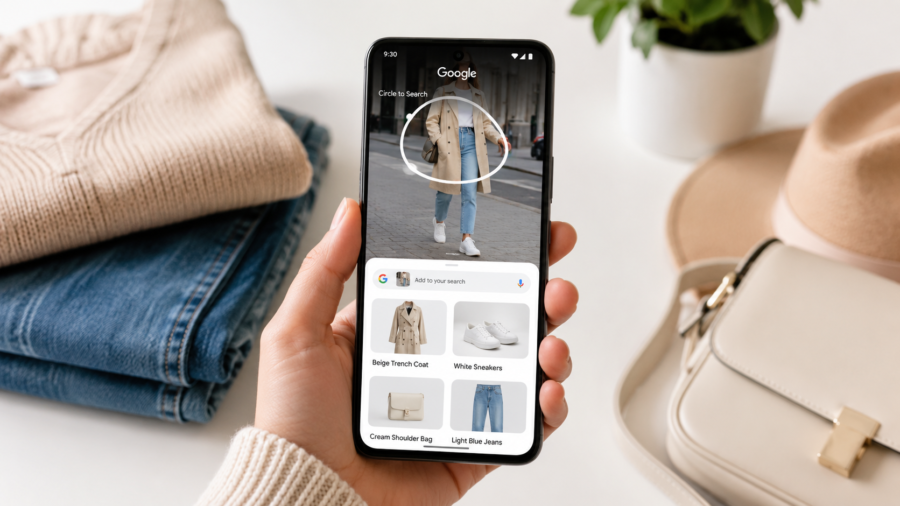
As part of the June Android Drop, Google says Circle to Search can now help users find a full outfit from what they see on screen. Instead of searching for only one item, users can circle a look and discover pieces from tops to footwear without switching apps.
It sounds like a small convenience feature. But it also shows where everyday search is going: more visual, more direct and more connected to the things people already do on their phones.
What Is Circle to Search Outfit Search?
Circle to Search is Google’s visual search feature on Android. It lets users search something on the screen by circling, tapping or highlighting it.
The new outfit search upgrade makes that experience more useful for fashion and shopping. If you see an outfit in a photo, video, social post or article, you can circle it and look for similar clothing items.
The feature is designed to identify multiple parts of a look. That means it may help with the shirt, jacket, pants, shoes or accessories instead of forcing users to search each item one by one.
Google says this is available on Android 14 and newer devices that support Circle to Search.
For ordinary users, the appeal is simple: less app switching, less guessing and less typing awkward descriptions into a search box.
Why This Feature Feels Timely
Fashion discovery has moved heavily into visual spaces.
People now find outfit ideas on short videos, social feeds, product images, creator posts and screenshots shared by friends. The old search method — typing “black oversized jacket with white sneakers” — does not always match how people actually discover style.
Most people do not know the exact name of an item. They only know what it looks like.
That is why visual search matters. It turns the phone screen itself into the search starting point.
If you see a look you like, you do not need to describe it perfectly. You can point to it.
This is especially useful for mobile users, because phones are where much of this discovery already happens.
Google Photos Wardrobe Adds Another Layer
The Android update also connects with a larger trend: AI-powered personal organization.
Google Photos Wardrobe is designed to use photos to help users organize clothes into a digital wardrobe. The idea is that your phone can identify clothing items from your own images, help group them by category and make it easier to mix and match outfits.
That is different from simply shopping for new clothes.
Instead of only asking, “Where can I buy something like this?” the wardrobe idea asks, “What do I already own, and how can I wear it?”
That makes the feature more practical for daily life. It can help people remember items they forgot about, plan outfits for work or travel, and reduce the need to buy something new every time they want a fresh look.
This is where AI becomes more personal. It is not only answering questions. It is organizing familiar parts of someone’s life.
The Bigger Shift: Search Is Becoming More Visual
For years, search was mostly text-based.
You typed a query, opened links and compared results. That still matters, but visual search is becoming more natural for many tasks.
Shopping is one of the clearest examples. A person may not know the product name, brand, fabric type or exact color. But the camera or screenshot can provide clues that text cannot.
Circle to Search fits into this shift because it removes several steps.
You do not need to save an image, open another app, upload it and wait. You can search from the screen you are already using.
For casual users, that can make AI feel less like a separate tool and more like a built-in phone feature.
Why It Could Be Useful Beyond Shopping
The obvious use case is fashion. But the same behavior applies to many everyday searches.
People could use similar visual tools to identify furniture, home decor, gadgets, plants, books, accessories or travel items they see online.
The key idea is not only “buy this item.” It is “help me understand what I am looking at.”
That is why Circle to Search is important as a user habit. Once people get used to searching visually, they may start using it for many small decisions during the day.
For publishers and websites, this also matters. Clean, useful images may become even more important because users can search inside what they see.
What Users Should Know Before Relying on It
This feature can be helpful, but it is not perfect.
Visual search results may show similar items rather than the exact product. Prices can vary. Availability can change. The same outfit may be shown by different stores, and not every result will be the best match.
Users should also be careful with shopping decisions. A visual match does not automatically mean a product is trustworthy, high quality or sold by a reliable store.
The best approach is to use Circle to Search as a discovery shortcut, then check the details before buying.
Look at product descriptions, seller reputation, return policies, sizing information and customer reviews where available.
Privacy and Personal Photos
Google Photos Wardrobe may also raise a natural question: what happens when AI organizes personal images?
Any feature that uses a photo library should be treated carefully by users. Clothing and outfit photos can feel personal, especially when they include travel, home life, events or other people.
Users should review feature availability, account settings and privacy controls before enabling any AI-powered photo organization tool.
The convenience may be useful, but people should understand what they are turning on and how it fits their comfort level.
Why This Topic Matters for Everyday Android Users
The most interesting part of this update is not that Android can help users shop.
It is that Android is becoming better at understanding context on the screen.
A phone is no longer just waiting for typed commands. It can look at what the user is seeing, understand the object or outfit, and suggest a next step.
That is a major direction for consumer technology.
For users, it means fewer manual searches. For app developers, it means more competition around visual discovery. For publishers and creators, it means images may play a larger role in how people find products, ideas and explanations.
Final Thoughts
Circle to Search outfit search is a practical example of AI becoming part of normal phone behavior.
It does not ask users to learn complicated prompts. It does not require a separate shopping assistant. It simply lets people point to something on screen and search from there.
Combined with Google Photos Wardrobe, it shows how Android is moving toward a more visual and personal kind of search.
For users, the benefit is clear: finding outfit inspiration, organizing clothing ideas and exploring similar items may become faster and easier.
For the wider web, the message is just as clear: the future of search is not only typed. Increasingly, it is visual, mobile and built directly into the screen people are already using.




Comments
You can write your views about this story. Comments may be moderated according to site settings.