
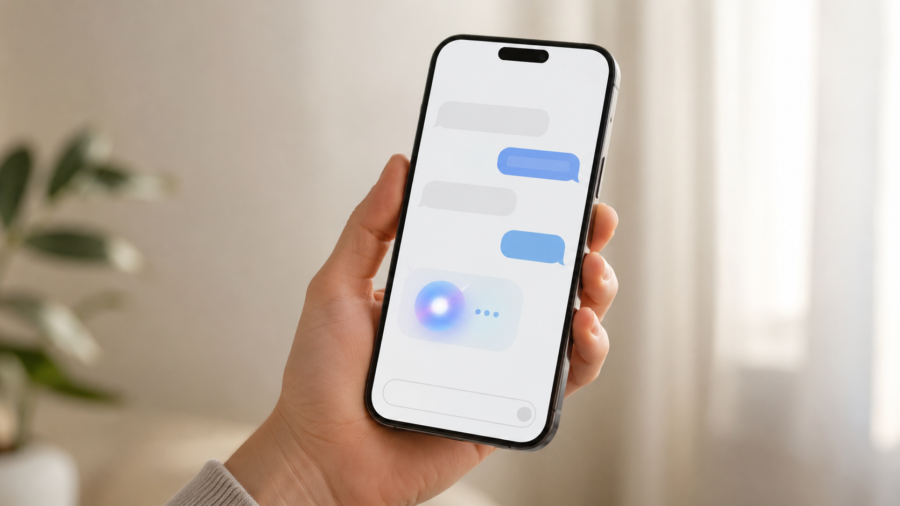
AI assistants are usually presented as shiny new apps, voice bots or futuristic devices. But one of the more interesting AI shifts may be happening in a place people already understand: the text message.
Poke, a startup that lets people use AI agents through simple messages, has been approved for Apple’s Messages for Business platform, according to TechCrunch. That means the service can now appear inside Apple’s Messages experience as a verified business account, alongside its existing support for SMS, Telegram and some WhatsApp markets.
On the surface, this sounds like a small platform update.
It is not the kind of announcement that arrives with a dramatic keynote or a new device. But it points to a bigger question for everyday users: what if the next useful AI assistant does not ask you to download another app at all?
Why this matters for ordinary iPhone users
Most people do not want to “manage an AI workflow.” They want to send a message, get something done and move on.
That is why a text-based AI agent is interesting. Texting is already familiar. It does not require a new interface, a complicated dashboard or a long setup process. If an AI assistant can live inside a chat thread, the barrier to using it becomes much lower.
Apple’s own Messages for Business system is designed for practical tasks. Apple says users can connect with companies in Messages to ask questions, schedule appointments, resolve issues, make purchases and more. Poke is different because it is not simply a store, airline or bank support channel. It is an AI agent that aims to help with tasks through conversation.
That distinction matters.
A chatbot usually answers questions. An AI agent is supposed to do more than reply. It may plan, organize, trigger actions or connect with other tools. In simple terms, a chatbot talks; an agent tries to help finish the task.
The big promise is convenience. The big risk is trust.
The timing is hard to ignore
Poke’s Apple Messages approval arrives just before Apple’s Worldwide Developers Conference, which begins on June 8. Apple has confirmed that WWDC will open with a keynote focused on the latest updates coming to its platforms.
That timing gives the story extra weight, even if Apple has not announced a direct connection between Poke and any upcoming Siri update.
Apple is widely expected to talk more about AI across iPhone, iPad and Mac. The company has spent the past few years trying to position Apple Intelligence as a more private, deeply integrated alternative to the louder AI products from competitors.
For readers, the important point is not whether Poke becomes a mainstream name overnight. The bigger point is that AI is moving into the apps people already use.
That may be a more realistic path than asking everyone to adopt a new AI app for every task.
Why text could be the best interface for AI agents
Voice assistants were supposed to make computing easier. In some cases, they did. Setting timers, checking weather and controlling smart home devices became more convenient.
But voice has limits.
People may not want to speak personal tasks out loud in public. Voice assistants can misunderstand requests. Long or detailed instructions are often easier to type than say. Text also gives users a record of what they asked and what the assistant replied.
That makes messaging a natural home for AI agents.
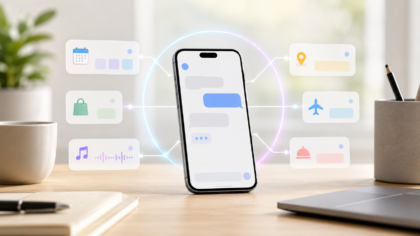
A text thread can handle short commands, follow-up questions and ongoing context. It also feels less intimidating than a full productivity app. A user might type, “Remind me to follow up with Sarah tomorrow,” or “Help me plan my afternoon around these errands,” and expect a simple response.
The best version of this idea is not about showing off AI. It is about reducing friction.
If the assistant works well, the user should not have to think about the technology behind it.
The app problem AI still needs to solve
One reason many AI tools struggle with mainstream users is simple: people already have too many apps.
A new AI product has to earn space on the home screen. It has to explain what it does. It has to convince people to open it regularly. That is difficult, even for very good software.
Messaging avoids part of that problem.
If an AI agent is available through a chat thread, it can feel more like contacting a helpful service than learning a new product. That is powerful because it matches an existing habit.
This is also why large tech companies are paying close attention to AI inside messaging. Meta has been pushing AI tools into WhatsApp, Instagram and Messenger. Google is building Gemini deeper into Android and its apps. Apple, traditionally more cautious, has a strong advantage if AI can work naturally inside iOS without making users feel overwhelmed.
The winning AI assistant may not be the one with the most dramatic demo. It may be the one people actually remember to use.
Trust will decide whether people use it twice
The challenge is that AI agents ask for more trust than ordinary chatbots.
If a tool only summarizes a paragraph, the risk is limited. If it starts handling reminders, calendar planning, purchases, travel details or personal routines, users need to know what it can access and what it can change.
That is where Apple’s platform rules matter. Messages for Business is not an open free-for-all in the same way a regular web chatbot can be. Businesses need approval, and the experience is presented inside Apple’s messaging environment.
Still, approval does not automatically answer every question a user may have.
People should pay attention to what information they share with any AI assistant. They should check whether the service stores messages, connects to other accounts, or takes actions outside the chat. They should also be careful with sensitive details such as financial information, health information or private documents unless the service clearly explains how that data is handled.
A useful AI agent should make these boundaries easy to understand.
If it feels confusing, users are right to slow down.
What Poke’s move says about the future of AI
Poke’s arrival on Apple Messages for Business is not proof that text-based AI agents will replace apps. It is also not proof that Siri is suddenly behind or that every iPhone user will start using AI through Messages.
The better reading is more practical: AI companies are trying to meet users where they already are.
That is a smart direction.
Most people do not care whether a tool is called an “agent,” “assistant” or “automation layer.” They care whether it saves time without creating new problems. They care whether it understands normal language. They care whether it is easy to stop, correct or ignore.
Text messaging has all the right ingredients for that kind of product. It is familiar, lightweight and flexible. It works for quick tasks and longer conversations. It can feel personal without requiring a new device.
For AI companies, the opportunity is clear. For users, the advice is simple: treat these tools as helpers, not magic.
What readers should watch next
There are three things worth watching after this announcement.
First, whether Poke becomes genuinely useful for everyday tasks, not just an interesting demo. Many AI products sound impressive at launch but fail when real users ask messy, ordinary questions.
Second, whether Apple opens more space for AI agents across its ecosystem. If more verified AI services appear inside Messages or other Apple apps, this could become a new category of iPhone experience.
Third, how privacy and permissions are explained. The more an AI agent can do, the more important it becomes for users to understand what it knows and what it controls.
The most successful AI tools will likely be the ones that feel boring in the best way: reliable, understandable and easy to leave when not needed.
Poke’s Apple Messages approval may not change the iPhone overnight. But it gives a useful glimpse of where consumer AI may be heading. Instead of asking people to chase another app, the next wave of AI may quietly arrive inside the conversations they already use every day.


Comments
You can write your views about this story. Comments may be moderated according to site settings.