
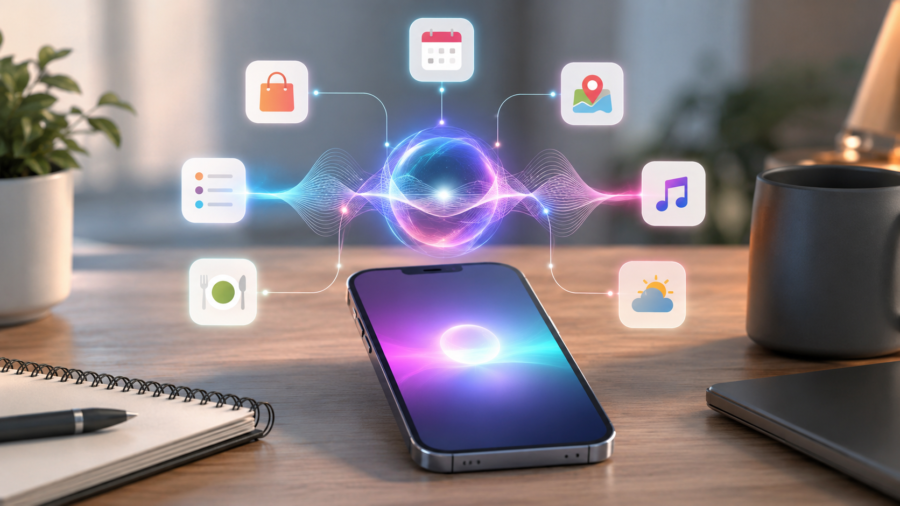
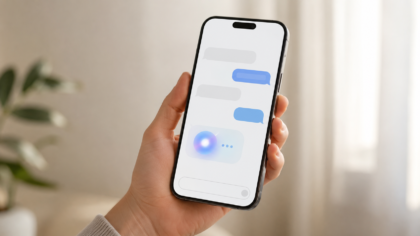
Siri has been part of the iPhone for years, but many users still treat it as a basic voice command tool.
People ask it to set timers, check the weather, start calls, send quick messages or control simple settings. Useful, but not always smart enough to feel like a real assistant.
That may be changing.
Apple is expected to use WWDC 2026 to show a more powerful AI version of Siri. Reports suggest the new Siri could become more conversational, understand context more clearly and work more deeply across apps and on-screen content.
If Apple gets this right, Siri may stop feeling like a separate voice feature and start becoming a real layer across the iPhone.
That matters because the future of apps may not be only about tapping icons. It may be about asking your phone to complete tasks across apps in a natural way.
Why Siri needs a major upgrade
Siri was early to voice assistants, but the AI era changed user expectations.
People are now used to chatbots that can write, summarize, explain, translate and hold longer conversations. Compared with those tools, older voice assistants can feel limited.
The problem is not that Siri is useless. It is that users increasingly expect assistants to understand more than one command at a time.
A modern AI assistant should understand context, remember the previous part of a conversation, work with content on the screen and connect to apps without forcing the user to open each one manually.
That is why a smarter Siri could be important for Apple.
The iPhone already has the apps, contacts, photos, messages, calendar events, notes and personal context that an assistant needs. The challenge is turning that into useful help without making privacy or control feel risky.
What could the new AI Siri do
Apple has not confirmed every detail in advance, so users should treat pre-WWDC reports carefully.
But the broad expectation is that Siri could become more conversational and more useful inside everyday iPhone workflows.
IBD reported that Apple is expected to introduce a significantly enhanced AI-powered Siri with deeper conversational abilities, contextual understanding and integration across apps and on-screen content. TechCrunch also described Siri’s expected upgrade as focused on handling multi-step tasks and interacting more naturally across apps and services.
That could mean Siri becomes better at requests like finding information inside apps, summarizing content, helping with messages, managing schedules, editing simple items or taking actions based on what is visible on the screen.
The key change is not only voice. It is action.
A useful AI Siri should not only answer questions. It should help users get things done.
Why app integration is the real story
The most important part of a smarter Siri is app integration.
Many AI assistants are powerful when they answer general questions, but less useful when they cannot interact with the apps people use every day.
Apple’s App Intents framework is important here. Apple says App Intents lets developers express an app’s capabilities and content to the system and integrate them with Siri and Apple Intelligence. In simple terms, it gives apps a way to tell the system what actions they can perform.
This could make Siri more practical.
Instead of only opening an app, Siri could understand what the app can do. A travel app might expose booking or itinerary actions. A notes app might expose search and summary actions. A task app might expose reminders, lists or project updates.
That is how Siri could become less like a voice shortcut and more like an AI assistant that works across the phone.
How this could change iPhone apps
If Siri becomes more capable, the way people use apps could change.
Today, users often open an app, search through menus, find the right screen and complete a task manually.
With a stronger AI assistant, the user might simply ask for the result.
For example, someone could ask their phone to find a recent file, summarize a long message thread, prepare a reply, add a calendar item, search inside a travel plan or compare information across apps.
The app would still matter, but the interface may become less important for simple tasks.
This does not mean app screens disappear. People will still need visual interfaces for browsing, editing, shopping, creating and reviewing. But AI could reduce the number of taps needed for routine actions.
Why this matters for ordinary users
For ordinary iPhone users, the value of AI Siri will depend on whether it saves time.
People do not need another impressive demo. They need help with real tasks.
A useful Siri upgrade could help with daily planning, messages, reminders, photos, travel details, emails, notes, app search and quick decisions. It could also help users who find complex app menus frustrating.
Voice and natural language can make a phone easier for people who are busy, driving, cooking, walking or multitasking.
But the experience has to be reliable.
If Siri misunderstands too often or takes actions without clear confirmation, users may not trust it. The best version will be helpful, but still predictable.
The privacy question
A smarter assistant needs more context, and context creates privacy questions.
If Siri can understand messages, files, app content and on-screen information, users need to know what is processed on the device, what goes to the cloud and what data is stored.
Apple has often positioned privacy as a major part of its AI strategy, especially through Apple Intelligence and Private Cloud Compute. That positioning will matter even more if Siri becomes more capable.
Users may accept AI help if they feel in control. They may reject it if the assistant feels too invasive.
The strongest AI assistant is not only the smartest one. It is the one people trust with personal context.
Could Siri become a standalone AI app
Some reports suggest Apple may also present Siri more like a standalone assistant experience, not only a voice feature hidden behind a button or wake phrase.
IBD reported expectations that Siri could support voice, text, attachments and persistent chat history, making it feel closer to a modern AI assistant experience.
If that happens, Siri could compete more directly with chatbot-style apps.
But Apple’s advantage is not simply creating another chatbot. Its advantage is the iPhone itself.
A standalone AI assistant is useful. An assistant that understands iPhone context and can work with apps could be much more useful.
What developers should watch
Developers should watch how Apple expands Siri and Apple Intelligence integration.
If App Intents becomes more important, developers may need to make their apps easier for Siri to understand. That could affect how apps expose actions, data, search functions and shortcuts.
Apps that integrate well with Siri may feel more useful in the AI era.
For example, a productivity app that lets Siri search tasks, create projects and summarize deadlines could become more valuable. A travel app that lets Siri find itineraries, compare bookings and surface trip details could feel more natural.
In this model, the best apps are not only visually polished. They are also AI-readable and action-ready.
Why Apple is under pressure
Apple is under pressure because other companies have moved quickly in AI.
Google, Microsoft, OpenAI, Meta and others have built AI assistants, search tools, business agents and app integrations. Users now expect AI to be more capable than old voice assistants.
Apple has a huge advantage because the iPhone is already central to daily life for millions of users.
But that also raises expectations. If Apple introduces a new AI Siri, people will expect it to work smoothly across messages, photos, apps, calendar events and device settings.
A weak upgrade would feel disappointing because the opportunity is so large.
A strong upgrade could make Apple feel more competitive in the AI app era.
Why this could affect iPhone upgrades
Advanced AI features may not work equally on every iPhone.
IBD reported that some expected AI Siri features may not run on a large share of current iPhones, potentially encouraging hardware upgrades.
This is important because on-device AI can require newer chips, more memory and stronger neural processing.
For users, this means the AI Siri story may also become a hardware story.
Some people may get the full experience only on newer devices. Others may receive a more limited version. Apple will need to explain clearly which features work on which iPhones.
What could go wrong
There are several risks.
First, Siri could be announced with impressive promises but limited real-world usefulness.
Second, app integration may depend heavily on developer support. If many apps do not expose useful actions, Siri may feel limited outside Apple’s own apps.
Third, privacy and permission controls must be clear. Users need to know when Siri is reading content, taking actions or using cloud processing.
Fourth, AI mistakes can be more serious when the assistant can act. A wrong answer is annoying. A wrong action inside an app can be more frustrating.
That is why Apple may move carefully. The company needs Siri to feel smart, but also safe and predictable.
How users should think about AI Siri
Users should not expect one update to magically change everything overnight.
A smarter Siri could be an important step, but AI assistants improve through developer support, real-world use, model upgrades and better app integration over time.
The best way to judge the new Siri will be practical.
Can it help you do real tasks faster
Can it understand context without becoming confusing
Can it work with the apps you actually use
Can it protect personal data while still being useful
Those questions matter more than demo videos.
The bigger takeaway
Apple’s expected AI Siri upgrade could change how people use iPhone apps.
The old app model was simple: open an app, tap through screens and complete a task manually. The new AI model may be different: ask the assistant, let it understand context and let it connect actions across apps.
If Apple delivers that experience well, Siri could become one of the most important layers on the iPhone.
It could make apps easier to use, reduce repetitive steps and bring AI into daily routines without forcing users into a separate chatbot app.
But the challenge is serious. Siri needs to be useful, private, predictable and deeply connected to apps.
The future of iPhone apps may not be only about what appears on the screen. It may also be about what the assistant can understand and do for you behind the scenes.
Comments
You can write your views about this story. Comments may be moderated according to site settings.