
Car screens used to be simple.
They showed the radio station, a basic map or a few settings. If the system was slow or ugly, drivers complained, but it usually did not define the whole car.
That is changing.
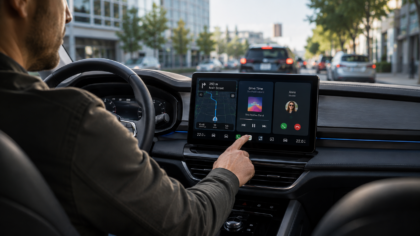
Modern vehicles are becoming more digital, and the dashboard screen is now one of the most important parts of the ownership experience. It controls navigation, music, calls, climate settings, charging information, driver profiles and sometimes even deeper vehicle functions.
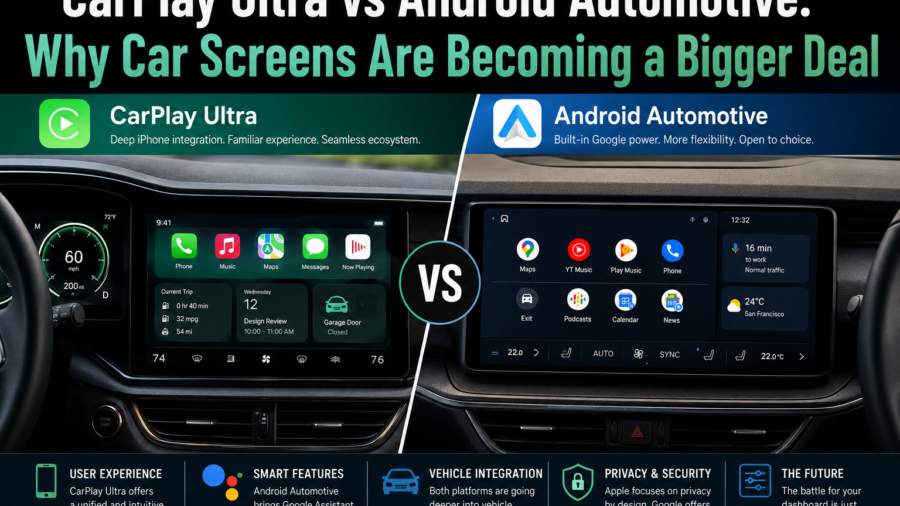
That is why CarPlay Ultra and Android Automotive matter.
They are not just about putting phone apps on a bigger screen. They show how Apple, Google and carmakers are competing for the most valuable digital space inside a vehicle: the dashboard.
For drivers, this could make cars easier to use. It could also make them more complicated if automakers rely too much on screens, subscriptions or confusing menus.
What Is CarPlay Ultra?
CarPlay Ultra is Apple’s deeper version of CarPlay.
Traditional CarPlay lets iPhone users bring familiar apps such as maps, music, calls and messages to the car’s display. CarPlay Ultra goes further by integrating more deeply with the vehicle’s screens and controls.
Apple says CarPlay Ultra can provide content for all driver screens, including the instrument cluster. That means the experience can include gauges, speed information, fuel or temperature displays, widgets and vehicle information, not just a phone-style app screen.
It can also work with some standard vehicle controls, such as radio and climate settings, depending on the carmaker’s implementation.
The important point is that CarPlay Ultra is designed to feel more like part of the car, not just a phone projected onto the car screen.
That is a major shift.
If it works well, iPhone users may get a more consistent and familiar interface across different vehicles. But it also depends heavily on whether carmakers choose to support it and how deeply they allow Apple’s system into the car experience.
What Is Android Automotive?
Android Automotive OS is different from Android Auto.
This distinction matters because the names are similar.
Android Auto is phone-based. You connect your Android phone to a compatible car, and the car screen shows an interface designed for driving. The phone is still the main source.
Android Automotive OS, often called AAOS, is built into the vehicle itself by the carmaker. Apps can run directly on the car’s infotainment system, and the carmaker can customize the experience.
That means Android Automotive can be more deeply connected to the vehicle than ordinary Android Auto.
Google also offers Google Automotive Services for automakers that want services such as Google Maps, Google Assistant and the Play Store inside the car.
For drivers, the difference is simple: Android Auto comes from your phone, while Android Automotive is part of the car.
Why the Difference Matters
The difference between a phone-projected system and a built-in car system affects how the dashboard works.
A phone-projected system is familiar and easy to update because it depends on the phone. Many drivers like this because they already know their phone apps and do not need to learn a completely new car interface.
A built-in system can be more integrated with the vehicle. It may understand charging status, climate controls, car settings and driver profiles more naturally. It can also work without depending on a phone connection.
CarPlay Ultra is interesting because it tries to move CarPlay closer to the deeper integration normally associated with built-in systems.
Android Automotive is interesting because it starts from the car itself, not the phone.
Both approaches are trying to solve the same problem: drivers want a dashboard that feels modern, useful and easy.
Why Car Screens Are Becoming So Important
Car screens matter more because the car is becoming more software-driven.
In an electric vehicle, the screen may show range, charging speed, route planning, battery preconditioning and nearby chargers. In a connected car, it may handle driver profiles, voice assistants, streaming apps, service reminders and over-the-air updates.
Even in petrol and hybrid vehicles, the screen often controls basic comfort and entertainment.
This can be useful when the interface is well designed.
A good screen can make navigation easier, reduce phone distraction and bring important information into one clear place. It can also help drivers understand the car better, especially in EVs where battery and charging information matter.
But a bad screen can make simple tasks frustrating.
If adjusting the fan takes three taps, or if basic controls are hidden behind menus, the car can feel worse even if the hardware is excellent.
That is why infotainment is no longer a small detail.
The Dashboard Is Becoming a Platform
Apple and Google are not only interested in car screens because of maps.
The dashboard is becoming a platform.
A platform controls the experience. It decides how apps appear, how information is organized, how voice assistants work and how drivers interact with digital services.
For Apple, CarPlay Ultra can extend the iPhone experience deeper into the vehicle. That is valuable because many iPhone users already trust Apple’s interface.
For Google, Android Automotive gives carmakers a flexible built-in platform that can support apps, services and deeper vehicle integration.
For automakers, the choice is more complicated.
They want good software because customers expect it. But they also do not want to lose control of the brand experience inside the car. A luxury carmaker, for example, may want its dashboard to feel unique rather than identical to every other vehicle.
This creates tension.
Drivers want familiar software. Automakers want brand control. Tech companies want platform influence.
The result is a dashboard battle that will shape future cars.
What Drivers May Gain
Drivers could benefit from this competition.
Car screens may become faster, clearer and more consistent. Navigation may improve. Voice assistants may become more useful. EV charging information may become easier to understand. Driver profiles may carry settings more smoothly across vehicles.
Phone users may also get a more familiar experience.
If you use an iPhone every day, CarPlay Ultra could make a supported car feel more natural. If you live in the Google ecosystem, Android Automotive with Google services may make maps, voice and apps feel more integrated.
Better software can also make cars feel fresher for longer.
If a car receives useful updates after purchase, the digital experience may not age as quickly as older infotainment systems did.
That is one of the promises of software-defined vehicles.
What Drivers Should Be Careful About
There are also risks.
The first is distraction. A bigger or smarter screen is not automatically safer. If the interface is crowded, slow or menu-heavy, it can take attention away from driving.
The second is over-reliance on touch controls. Physical buttons still matter for common tasks like volume, temperature and defrosting. Many drivers prefer controls they can use without looking away from the road.
The third is privacy. Connected car systems may handle location data, app use, voice commands and vehicle information. Drivers should understand what data is collected and how it is used.
The fourth is subscriptions. As car software becomes more important, automakers may try to charge for features through monthly plans. Some connected services may justify ongoing fees, but basic vehicle functions should not feel locked behind confusing paywalls.
Good software should make the car easier to live with, not harder.
CarPlay Ultra or Android Automotive: Which Is Better?
There is no universal winner.
CarPlay Ultra may be better for iPhone users who want a familiar Apple-style experience that reaches deeper into the vehicle. It can make the car feel more connected to the phone and more consistent with the rest of Apple’s ecosystem.
Android Automotive may be better when the carmaker wants a built-in operating system that can run apps directly in the vehicle and integrate more naturally with car systems.
But the final experience depends on the specific car.
A well-designed Android Automotive system can be excellent. A poorly designed one can feel confusing. CarPlay Ultra can be powerful, but only if the carmaker supports it well and balances Apple’s interface with the vehicle’s own controls.
Drivers should not choose based only on the name.
They should test the system in the car they are actually considering.
What to Check During a Test Drive
When testing a modern car, spend time with the screen.
Check how easy it is to adjust climate controls. Try navigation. Connect your phone. Look at the instrument cluster. See how quickly the system responds. Check whether important functions are physical buttons, screen controls or both.
If the car is electric, check how clearly it shows range, charging stops and battery information.
Ask whether the system receives updates. Ask which features require subscriptions. Ask what happens if you stop using the connected services.
Also check phone compatibility. A great dashboard system may be less useful if it does not work well with the phone you already use.
The screen should not be an afterthought. It is part of the car’s daily experience.
Why This Trend Will Keep Growing
Car screens will keep becoming more important because vehicles are becoming more connected, more electric and more software-defined.
Drivers expect technology to work smoothly. They are used to fast phones, simple apps and regular updates. When a car screen feels outdated, the whole vehicle can feel older than it is.
Automakers know this.
That is why they are investing in software platforms, digital dashboards and connected services. Apple and Google know it too, which is why they want a larger role inside the vehicle.
The future of car competition will not only be about horsepower, battery size or fuel economy.
It will also be about who makes the car easier to use.
Final Takeaway
CarPlay Ultra and Android Automotive show that the dashboard is becoming one of the most important parts of the modern car.
CarPlay Ultra pushes Apple’s familiar iPhone experience deeper into supported vehicles. Android Automotive gives carmakers a built-in platform that can run directly inside the car and connect more closely with vehicle systems.
For drivers, the best outcome is simple: clearer screens, better navigation, smarter controls and fewer frustrating menus.
But the trend also brings new questions about distraction, privacy, subscriptions and long-term software support.
The next time you compare cars, do not only look at the engine, battery, seats or exterior design. Spend time with the screen.
In many new vehicles, the dashboard software may shape your daily experience more than you expect.

Comments
You can write your views about this story. Comments may be moderated according to site settings.