
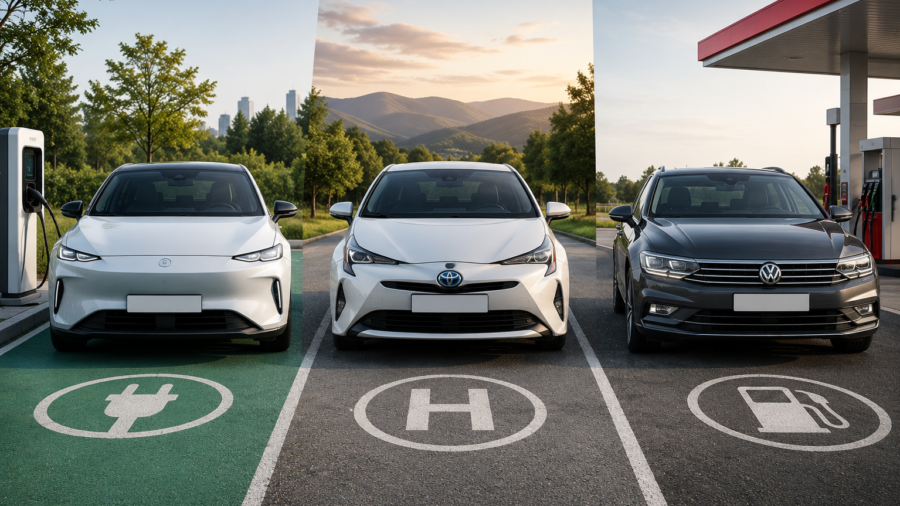
Choosing your next car used to feel simpler.
You compared size, price, fuel economy, reliability and maybe whether you wanted petrol or diesel. Now the decision includes electric cars, regular hybrids, plug-in hybrids and traditional petrol models.
That can make car shopping confusing.
Electric vehicles promise quiet driving and lower running costs for many owners. Hybrids offer better efficiency without fully changing your routine. Plug-in hybrids can drive on electric power for short trips but still keep a petrol engine. Petrol cars remain familiar, widely available and easy to refuel.
There is no single best choice for everyone.
The right car depends on where you live, how far you drive, whether you can charge at home, how often you take long trips and how much you want to change your driving habits.
Why This Choice Is More Complicated Now
The car market is changing quickly.
Electric vehicles are becoming more common, charging networks are expanding and automakers are investing heavily in batteries and software. At the same time, many drivers are not fully ready to switch to a car that depends completely on charging.
That is why hybrids are still important.
A regular hybrid can reduce fuel use without requiring a plug. A plug-in hybrid can be useful for people who can charge regularly but still want petrol backup. Petrol cars may still make sense for buyers who need lower purchase prices, simple refueling or long-distance flexibility.
The best choice is not about following a trend.
It is about matching the car to your real life.
When an Electric Car Makes Sense
An electric car makes the most sense when charging is easy.
If you can charge at home, an EV can be very convenient. You can plug in overnight and start most days with enough range. For many drivers, that is easier than visiting a fuel station.
Electric cars can also feel smooth and quiet. They usually deliver quick acceleration and can be pleasant in city driving. If your daily journeys are predictable and within the car’s range, an EV may fit your routine well.
EVs can also reduce local tailpipe emissions because they do not burn fuel while driving. For drivers who want to move away from petrol use, that is a major reason to consider one.
But an electric car is not automatically the right answer.
If you cannot charge at home or work, you may depend on public charging. That can be fine in some areas, but frustrating in others. Public chargers may be busy, broken, expensive or inconvenient depending on where you live.
Before choosing an EV, ask yourself one practical question: where will I charge most of the time?
If the answer is easy, an EV becomes much more attractive.
When a Regular Hybrid Makes Sense
A regular hybrid is often the easiest middle ground.
It has a petrol engine and an electric motor, but it does not need to be plugged in. The car charges its small battery through driving and braking, then uses electric assistance to improve efficiency.
For many drivers, that simplicity is the main appeal.
You drive it like a normal petrol car. You refuel at a normal station. There is no charging routine, no cable and no need to plan around public chargers.
Regular hybrids can be especially useful in city traffic, where stop-start driving allows the electric system to help more often. They can also suit drivers who want better fuel economy but are not ready for a full EV.
The downside is that a regular hybrid usually cannot drive long distances on electric power alone. It is more efficient than a traditional petrol car in many situations, but it is not the same as driving electric.
Choose a regular hybrid if you want efficiency without changing your habits.
When a Plug-In Hybrid Makes Sense
A plug-in hybrid, or PHEV, can be a good option for the right driver.
It has a larger battery than a regular hybrid and can be charged from an external power source. That means it can usually drive shorter trips on electric power before the petrol engine is needed.
This sounds ideal for people who have short daily commutes but still take longer trips.
For example, if you can charge at home and most of your driving is local, a plug-in hybrid may let you use electric power for many everyday journeys. When you travel farther, the petrol engine gives you backup.
But there is a catch.
A plug-in hybrid only works at its best when you actually charge it. If you rarely plug it in, you may not get the benefit you expected. You may be carrying extra battery weight while still using petrol most of the time.
A PHEV is not the best choice for someone who cannot or will not charge regularly.
Choose a plug-in hybrid if your routine includes easy charging and many short trips.
When a Petrol Car Still Makes Sense
Petrol cars are still familiar, simple and widely supported.
They may make sense for drivers who want a lower upfront price, easy refueling and no charging concerns. They can also suit people who drive long distances in areas where charging infrastructure is weak.
A petrol car can be especially practical for buyers who do not have home charging, live in areas with limited public chargers or need a car mainly for occasional use.
The downside is fuel cost and emissions. Petrol cars depend fully on fuel, and running costs can rise when fuel prices increase. They also do not offer the same electric driving benefits as EVs or hybrids.
Still, not every driver is ready for electric or hybrid technology.
For some buyers, a simple petrol car may remain the most practical short-term choice, especially if budget and convenience matter most.
Daily Driving Should Decide More Than Trends
The most important factor is your daily routine.
If you drive mostly short distances and can charge at home, an EV may be the strongest choice. If you drive in the city but cannot charge, a regular hybrid may be easier. If you can charge but still want long-trip flexibility, a plug-in hybrid may work well. If you need the lowest complexity and easiest refueling, petrol may still make sense.
Trends are useful, but they do not know your driveway, commute or budget.
A driver with a garage and short commute may love an EV. A driver who parks on the street and takes frequent long trips may prefer a hybrid or petrol car. A family with one long-distance car and one city car may choose different powertrains for each vehicle.
The right answer can change from household to household.
Charging Access Is the Biggest EV Question
Charging access is often more important than the EV itself.
A good electric car can feel inconvenient if you have nowhere easy to charge it. A modest EV can feel excellent if you can charge at home every night.
Home charging changes the experience because it turns charging into a background habit. You do not need to visit a public station for normal daily driving.
Public charging is improving, but it is not equally convenient everywhere. Reliability, price, payment methods, location and charger speed all matter.
Before buying an EV or plug-in hybrid, check charging near your home, workplace and regular routes. Do not rely only on the promise that the network is growing.
Your local charging reality matters most.
Long Trips Need a Different Calculation
Long-distance driving changes the decision.
EVs can handle road trips, especially with good route planning and fast charging access. But they require more planning than petrol or regular hybrid cars in many areas.
A regular hybrid is simple for long trips because it refuels quickly and still offers better efficiency than many traditional petrol cars.
A plug-in hybrid can be useful because it has petrol backup, but on long motorway journeys it may behave more like a petrol car once the battery is low.
A petrol car remains the simplest option for drivers who regularly travel long distances through areas with limited charging.
If you only take a long trip once or twice a year, an EV may still be fine. If long trips are part of your weekly routine, compare charging and refueling convenience carefully.
Budget Is More Than the Purchase Price
Car cost is not only about the price on the window.
You should think about fuel or electricity costs, insurance, servicing, road taxes, depreciation, charging equipment and long-term reliability.
An EV may cost more upfront but less to run for some drivers. A hybrid may have a higher purchase price than a petrol car but save fuel over time. A petrol car may be cheaper to buy but more expensive to fuel.
The balance depends on your mileage and local prices.
This is why broad claims can be misleading. The cheapest car to buy is not always the cheapest car to own. The lowest running-cost car is not always the easiest to afford upfront.
Before choosing, compare the total cost based on your own driving pattern.
What About Resale Value?
Resale value is another factor to consider.
EV values can vary depending on battery confidence, model popularity, charging standards and incentives. Hybrids often appeal to buyers who want efficiency without charging concerns. Petrol cars may still have demand, but long-term policy changes and fuel costs can affect their appeal.
Nobody can predict resale value perfectly.
The safest approach is to buy a car that fits your needs now, while also checking battery warranty, service support, brand reputation and market demand.
For EVs, battery warranty and software support are especially important. For hybrids, reliability and service history matter. For petrol cars, fuel economy and maintenance costs still count.
Which Should You Choose?
Choose an electric car if you can charge easily, drive predictable distances and want to reduce fuel use as much as possible.
Choose a regular hybrid if you want better efficiency without plugging in.
Choose a plug-in hybrid if you can charge regularly and want electric driving for short trips with petrol backup for long journeys.
Choose a petrol car if you need the simplest refueling experience, lower upfront cost or do not have reliable charging access.
The best choice is not the newest technology. It is the one you will use properly.
Final Takeaway
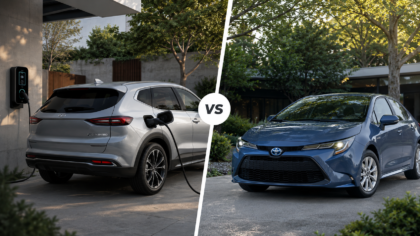
Electric, hybrid and petrol cars all make sense for different drivers.
An EV can be excellent if charging is easy and your driving routine fits the range. A regular hybrid can be a practical upgrade for drivers who want efficiency without changing habits. A plug-in hybrid can work well when it is charged regularly. A petrol car can still be the simplest option where budget, refueling and long-distance convenience matter most.
The smartest decision starts with your real life.
Look at your parking, charging access, daily mileage, long trips, budget and how much change you are comfortable with.
The future of driving may be electric, but the best car for you today is the one that fits your routine without making life harder.

Comments
You can write your views about this story. Comments may be moderated according to site settings.