
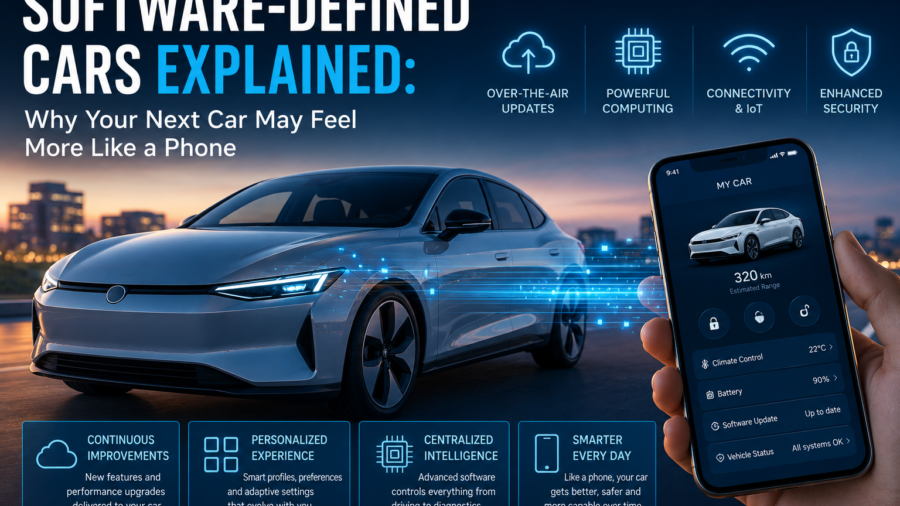
Cars used to be judged mainly by engines, fuel economy, comfort and design.
Those things still matter. But a new part of the car-buying conversation is becoming harder to ignore: software.
Modern vehicles are no longer just machines with a few digital screens added inside. They are becoming connected computers on wheels, with features that can be updated, improved or changed long after the car leaves the factory.
This is where the idea of a software-defined car comes in.
The phrase may sound technical, but the basic meaning is simple. A software-defined car is a vehicle where many important features are controlled and improved through software rather than fixed hardware alone.
In everyday terms, your next car may feel a little more like your phone. It may receive updates, add features, change settings, improve digital services and connect more deeply with apps and online systems.
That can be useful. It can also raise new questions about privacy, reliability, subscriptions and who really controls the features inside your car.
What Is a Software-Defined Car?
A software-defined car is a vehicle where software plays a central role in how the car works.
In older cars, many features were fixed when the vehicle was built. If you wanted a better infotainment system, improved navigation or a new driver-assistance feature, you often needed a newer car or extra hardware.
Software-defined vehicles are different.
They are designed so that more features can be updated over time. This can include infotainment, navigation, climate controls, digital displays, driver profiles, connected services and some advanced assistance systems.
Not everything in a car should be treated casually as software. Safety-critical systems need strict testing and regulation. But many non-safety features can become more flexible when they are built around software platforms.
That is why automakers and technology companies are investing heavily in this area.
They do not just want cars to be manufactured once and forgotten. They want vehicles that can evolve after purchase.
Why Cars Are Becoming More Like Phones
The smartphone comparison is useful because most people already understand it.
When you buy a phone, the hardware matters: screen, camera, battery and processor. But the software experience matters just as much. Updates can add features, fix bugs, improve security and change how the device feels.
Cars are moving in a similar direction.
A modern car may have large screens, voice assistants, app-like menus, cloud-connected navigation, driver profiles and over-the-air updates. Some vehicles can receive software improvements without visiting a dealership.
This does not mean cars are becoming simple gadgets. A car is far more serious than a phone because it moves people at speed and must meet strict safety standards.
But from the driver’s point of view, the experience is becoming more digital. The dashboard, settings, maps, entertainment and even some comfort features now depend heavily on software quality.
A car with poor software can feel frustrating, even if the engine and seats are good.
What Over-the-Air Updates Mean
Over-the-air updates are one of the biggest reasons software-defined cars matter.
An over-the-air update means the vehicle can receive software changes remotely, often through an internet connection. Instead of taking the car to a dealer for every small update, some improvements can arrive digitally.
This can be helpful for bug fixes, interface changes, navigation improvements and certain feature updates.
For drivers, the benefit is convenience. A car may get better after purchase rather than slowly feeling outdated. Problems can sometimes be fixed faster. Digital services can improve without replacing the whole vehicle.
But there is also a downside.
Updates need to be reliable. A bad update on a phone is annoying. A bad update in a car can be much more serious. Drivers also need clear communication about what is changing, what data is used and whether any features are being added, removed or moved behind subscriptions.
The update system should make the car better, not make ownership feel uncertain.
Why Automakers Care So Much About Software
Automakers care about software because it changes the business of cars.
A traditional car sale mostly happens once. The customer buys the vehicle, and the automaker earns money from the sale, servicing and parts.
Software can create a longer relationship.
Connected services, navigation, entertainment, driver-assistance features, subscriptions and upgrades can continue after the car is sold. This gives automakers new ways to earn revenue, but it also creates pressure to deliver good digital experiences.
This is not easy.
Car companies are very good at engineering vehicles, safety systems and manufacturing at scale. But building smooth software, fast updates and app-like user experiences is a different challenge.
That is why many automakers are working with technology companies, chipmakers and software platforms.
The future car market may be shaped not only by who builds the best engine or battery, but also by who builds the best software experience.
Android Automotive, CarPlay and the Dashboard Battle
The car dashboard has become one of the most important digital spaces in modern life.
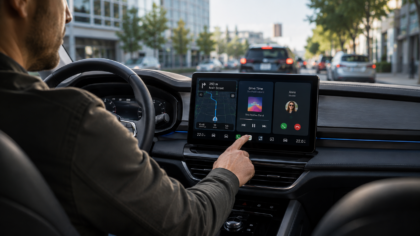
Drivers use it for navigation, music, calls, messages, climate controls, charging information, parking cameras and vehicle settings. As cars become more connected, the dashboard becomes even more important.
This is why systems such as Android Automotive, Android Auto and Apple CarPlay matter.
There is a difference between them. Android Auto and CarPlay usually mirror parts of a phone experience onto the car screen. Android Automotive OS can be built more deeply into the vehicle itself, depending on the carmaker’s implementation.
For drivers, the technical difference may not matter at first. What matters is whether the screen is easy to use, reliable, safe and clear while driving.
Nobody wants a car interface that feels like a confusing tablet bolted to the dashboard.
The best car software should reduce distraction, not create more of it.
What Drivers May Gain
Software-defined cars could bring real benefits.
Navigation can improve with live traffic, charging stops and route planning. Infotainment systems can become faster and more useful. Driver profiles can remember seat, climate and media preferences. Electric vehicles can receive range or charging improvements through software tuning.
Some features may also be added after purchase.
For example, a carmaker might improve voice control, update the interface or add new connected services. In some cases, vehicles may receive better energy management, improved parking assistance or smarter route suggestions.
This can make the car feel more modern for longer.
A well-designed software-defined car should age better than a vehicle whose digital system is frozen at launch.
What Drivers Should Be Careful About
The software-defined future also comes with concerns.
The first is subscriptions. Automakers may try to charge monthly fees for features that drivers used to expect as standard. Some subscription services may be reasonable, especially if they depend on cloud data or ongoing support. Others may frustrate buyers if they feel like basic car features are being locked behind payment.
The second concern is privacy. Connected cars can collect data about location, driving behavior, app use and vehicle status. Drivers should understand what data is collected, how it is used and whether they can control it.
The third concern is long-term support. A software-defined car is only useful if the automaker continues to support it. If updates stop too soon, the digital experience may age badly.
The fourth concern is reliability. A car should not feel unfinished at launch with the promise that software will fix everything later.
Updates are useful, but they should not replace good quality from the beginning.
Why This Matters for Electric Cars
Software-defined systems are especially important in electric vehicles.
EVs depend heavily on software for battery management, charging, range estimates, route planning and energy efficiency. A good EV experience is not only about battery size. It is also about how well the car manages that battery and explains information to the driver.
Charging is a good example.
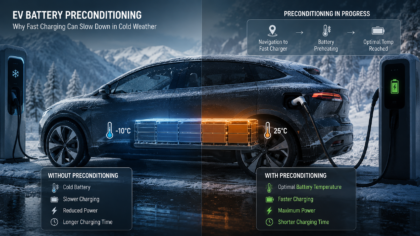
An EV can be more useful if its software can plan routes around chargers, estimate arrival battery percentage, prepare the battery for fast charging and show reliable charging information.
If the software is confusing or inaccurate, the driver may lose confidence.
This is one reason EV companies and traditional automakers are investing so much in digital platforms. Electric cars need strong software to feel easy in everyday use.
Will Software Make Cars Better or More Complicated?
Both outcomes are possible.
Good software can make cars safer, easier and more enjoyable to use. It can simplify navigation, reduce small annoyances, improve energy use and keep the vehicle fresh over time.
Bad software can make cars frustrating. Slow screens, confusing menus, unreliable updates and unnecessary subscriptions can make a vehicle feel worse, even if the hardware is strong.
This is why software-defined cars should not be judged only by the number of features they offer.
More features do not always mean a better car.
The real test is whether the software makes driving easier, clearer and less stressful.
What to Look for in a Software-Heavy Car
Drivers shopping for a modern car should pay attention to the digital experience during a test drive.
Is the screen easy to understand? Are climate controls simple to use? Does the car support the phone system you prefer? Are important settings buried in menus? Does the navigation work well? Are updates clearly explained? Are any features subscription-based?
It is also worth checking how long the automaker promises software support and whether past updates have improved or frustrated owners.
A car’s software is no longer a small extra. It is part of the ownership experience.
Before buying, drivers should treat the interface and update policy as seriously as boot space, fuel economy or range.
Final Takeaway
Software-defined cars are changing what drivers should expect from a vehicle.
The car of the future will not be judged only by its engine, battery or design. It will also be judged by its screens, updates, connected services, privacy controls and how easily the software fits into daily life.
This can be a good thing. Cars may become more useful, more personalized and better supported over time.
But it also means drivers need to ask new questions.
Who controls the software? What happens when updates stop? Which features require subscriptions? What data does the car collect? Does the digital experience actually make driving easier?
Your next car may feel more like a phone in some ways. The challenge is making sure that is useful, reliable and driver-friendly — not just another screen with more settings to manage.

Comments
You can write your views about this story. Comments may be moderated according to site settings.