
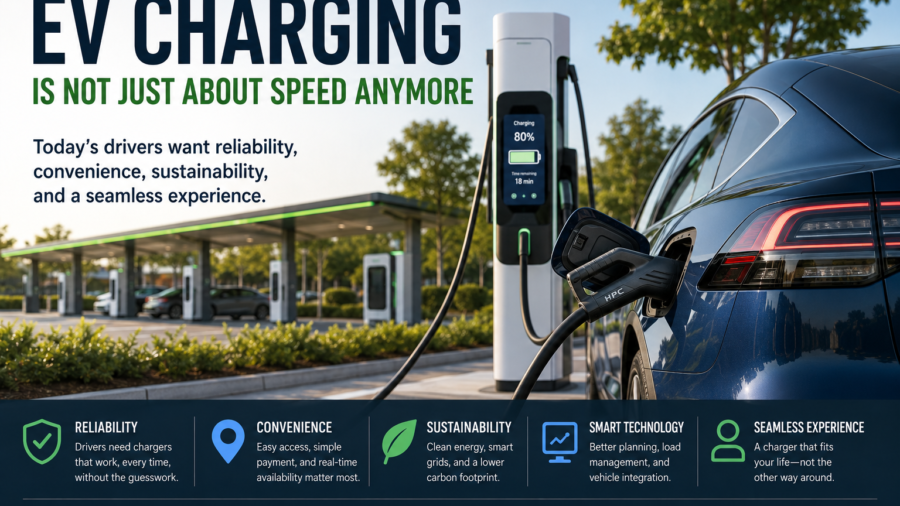
EV charging used to sound like a simple race.
How fast can the car charge? How many miles can it add in 10 minutes? How powerful is the charger?
Speed still matters. Nobody wants to wait longer than necessary during a road trip. But as more drivers consider electric vehicles, the charging conversation is becoming more practical.
A fast charger is only useful if it works. It is only convenient if it is in the right place. It only feels easy if payment is simple, the cable reaches the car and the driver feels safe while waiting.
That is why EV charging is no longer just about speed.
For many ordinary drivers, the real question is not “How fast can this charger be?” It is “Can I trust this charging stop when I need it?”
Why Charging Experience Matters More Now
Electric vehicles are moving beyond early adopters.
The first wave of EV buyers was often more comfortable with new technology. They were willing to learn charging apps, plan routes carefully and accept some inconvenience. The next wave of buyers may be less patient.
These drivers are comparing EVs with the familiar experience of petrol or diesel cars. A fuel stop is usually simple: pull in, pay, fill up and leave. EV charging can be easy too, especially at home, but public charging still feels uncertain for many people.
This uncertainty affects buying decisions.
A driver may like an electric car during a test drive but still worry about long trips, broken chargers, confusing payment systems or busy stations. If the charging experience feels unreliable, the car itself becomes harder to choose.
That is why charging infrastructure has become one of the biggest parts of the EV story.
Speed Still Matters, but It Is Not Enough
Fast charging is important because it reduces waiting time.
For drivers on long journeys, a high-power charging station can make an EV feel much more practical. Instead of stopping for a long break, they may be able to add enough range during a coffee stop or meal.
But speed is not the whole experience.
A charger advertised as fast may not always deliver its maximum speed. Charging speed can depend on the car, battery temperature, state of charge, charger condition and how many vehicles are using the site.
This means the number on the charger does not tell the full story.
A slower but reliable charger in a convenient location may sometimes be more useful than a very fast charger that is often broken, blocked or difficult to access.
For drivers, confidence matters as much as peak speed.
Reliability May Be the Biggest Issue
Reliability is one of the most important parts of public charging.
When a driver arrives at a charging station, they expect the charger to start, the payment to work and the session to continue without problems. If that does not happen, the experience can quickly become stressful.
This is different from a phone charger at home. If one cable fails, you may have another. If a public EV charger fails during a trip, the driver may need to find another station with limited battery remaining.
That creates anxiety.
Charging networks are improving in many markets, but drivers still remember bad experiences. A single failed charging stop can shape how someone feels about EV ownership.
That is why uptime, maintenance and accurate charger status are so important. An app saying a charger is available is not enough if the charger does not actually work when the driver arrives.
Location Can Matter as Much as Power
A charging station is not useful just because it exists.
Location matters.
A good charging stop is easy to find, easy to enter, safe to use and close to something useful. Drivers may need restrooms, food, coffee, shade, lighting or a place to wait. Families may need a safer and more comfortable stop than a lonely charger at the edge of a dark parking lot.
This is especially important because charging takes longer than refueling.
Even with fast charging, drivers may spend enough time at the location to notice whether it feels comfortable. A well-placed charger near a supermarket, cafe, highway service area or shopping center can feel much easier than one in an isolated corner.
The future of EV charging is not just about more plugs. It is about better stops.
Payment Needs to Be Simple
Payment is another part of the charging experience that can frustrate drivers.
Some charging networks require apps. Some require accounts. Some use contactless payment. Some have roaming agreements with other networks. Others can feel confusing for first-time users.
For EV adoption to grow, public charging needs to feel simple.
A driver should not need to download several apps, create multiple accounts and guess which system works at each stop. That may be acceptable to enthusiasts, but it is not ideal for ordinary drivers.
Simple payment builds confidence.
Contactless card support, clear pricing, visible instructions and reliable receipts can make a big difference. The easier payment becomes, the less intimidating EV charging feels.
Clear Pricing Is Part of Trust
Drivers also need to understand what they are paying.
Charging prices can vary depending on network, location, power level, membership plan and time of day. Some stations charge by energy used. Others may include idle fees or parking fees.
This can make public charging feel confusing compared with fuel pricing.
A driver should be able to see the price clearly before starting a session. They should also understand whether staying too long after charging ends will cost extra.
Transparent pricing helps drivers compare options and avoid frustration.
If people feel surprised by the cost, they may lose trust in public charging.
Home Charging Still Has a Big Advantage
For many EV owners, the best charging experience is at home.
Home charging can be simple: plug in overnight and wake up with enough range for the next day. For drivers with a driveway, garage or private parking, this is one of the biggest advantages of electric car ownership.
But not everyone has home charging.
Apartment residents, renters and people who park on the street may depend more heavily on public chargers. For them, the public charging experience is not occasional. It is central to whether an EV works in daily life.
This is why charging access creates a divide between drivers.
One person may find EV ownership effortless because they charge at home. Another may find it inconvenient because their neighborhood lacks reliable public chargers.
Improving public charging is especially important for drivers who cannot charge at home.
Road Trips Need Better Planning Tools
Long-distance EV travel is becoming easier, but planning still matters.
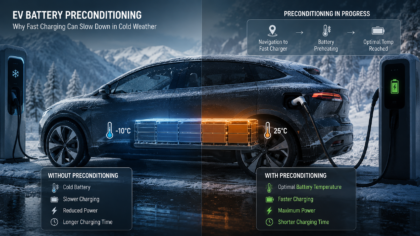
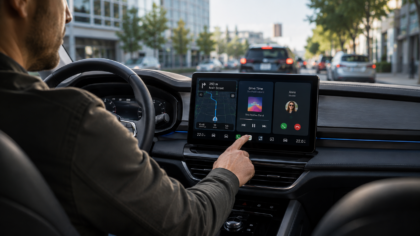
Good route planning tools can help drivers find chargers, estimate arrival battery level and choose stops based on speed and reliability. In some EVs, the car can even prepare the battery for faster charging before reaching a charger.
These features can make the experience smoother.
But drivers still need accurate information. If a route planner sends someone to a charger that is busy, broken or inaccessible, confidence drops quickly.
The best EV road trip experience combines fast charging, reliable live data and convenient locations. Without all three, drivers may feel they are gambling with their travel plans.
Charging Comfort Will Become a Competitive Advantage
As more EVs arrive on the road, charging locations will compete on experience.
A basic charger in a bare parking lot may not be enough. Drivers may prefer stations with lighting, restrooms, food, seating, shade, security and clear signage.
This is similar to how fuel stations evolved.
Many petrol stations are not just pumps. They are convenience stops. EV charging may follow the same direction, but with even more emphasis on comfort because drivers spend more time there.
For charging companies, this creates an opportunity.
A station that feels safe, clean and easy may become a preferred stop, even if another charger nearby is slightly faster.
What Drivers Should Check Before Buying an EV
Anyone considering an electric car should look beyond the vehicle’s range number.
Start with charging access. Can you charge at home? Is there charging at work? Are there reliable public chargers near your usual routes? What fast chargers are available on longer trips?
Then check how the car handles route planning. Does it show charger availability? Does it estimate battery level clearly? Does it help plan longer journeys?
Also check plug compatibility, charging speed and whether the car’s charging curve fits your needs. Peak charging speed is useful, but real-world charging time matters more.
Finally, think about your lifestyle. If you drive mostly locally and can charge at home, EV ownership may feel very easy. If you often take long trips and depend on public chargers, the charging network around you matters more.
The right EV decision depends on both the car and the charging environment.
What Charging Networks Need to Improve
Charging networks need to focus on reliability, simplicity and location.
More chargers are important, but more broken or poorly placed chargers will not solve the problem. Drivers need stations that work consistently, show accurate live status and support simple payment.
Clear pricing also matters. So does maintenance. A charger that stays broken for weeks damages trust in the whole network.
Charging networks should also think about the waiting experience. Lighting, safety, restrooms and nearby services can make charging feel less like a chore.
The goal should be simple: make public charging feel predictable.
When drivers trust the network, they are more likely to trust the car.
Final Takeaway
EV charging is not just about speed anymore.
Fast chargers are important, but they are only one part of the experience. Drivers also care about reliability, location, payment, pricing, safety, comfort and whether the charger is available when they arrive.
For electric vehicles to become easier for more people, charging needs to feel less like a technical challenge and more like a normal part of driving.
That means building not only faster chargers, but better charging stops.
The future of EV adoption may depend as much on the quality of the charging experience as on the cars themselves.
Comments
You can write your views about this story. Comments may be moderated according to site settings.