
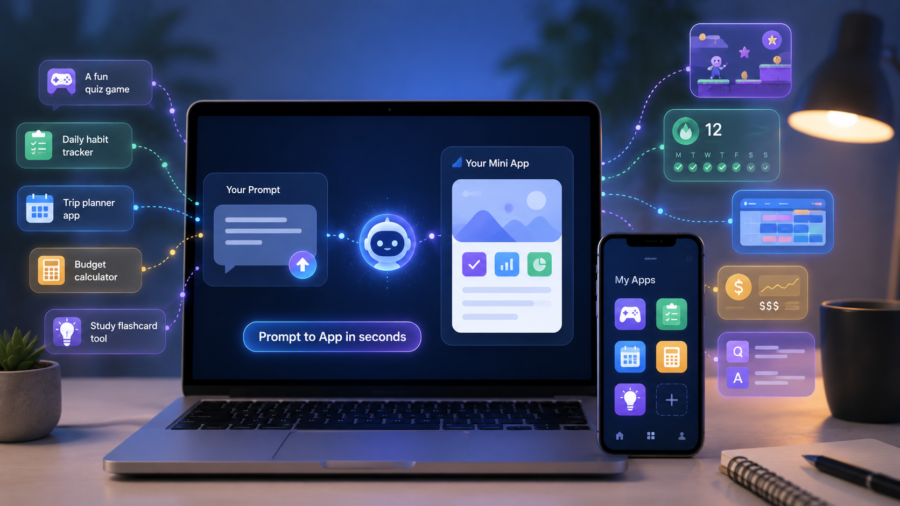
AI is no longer only helping people write text, generate images or summarize documents.
It is starting to help people create small pieces of software.
A new wave of AI app builders lets users describe an idea in normal language and turn it into a mini app, tool, game, calculator or interactive experience. Instead of learning code, users type what they want and the system builds a working version.
This trend is sometimes called prompt-to-app creation or vibe coding. The idea is simple: software creation becomes more like describing a goal than writing every line of code manually.
Sekai is one of the latest startups pushing this idea into consumer apps. Axios reported that Sekai raised a $20 million Series A round to expand its AI-powered platform for creating mini apps through simple text prompts. The platform lets users build, play, share and remix mini apps from natural-language ideas.
This does not mean everyone is suddenly a professional software developer. But it does show where apps may be heading: from fixed tools people download to flexible experiences people can create on demand.
What is an AI app builder
An AI app builder is a tool that creates software from a description.
Instead of starting with a blank code editor, a user might type something like a request for a habit tracker, a quiz game, a travel packing checklist, a meal planner or a small calculator.
The AI then generates the structure, interface and logic needed to make that mini app work.
Some tools are aimed at developers and startups. Others are aimed at normal users who want quick interactive tools without learning programming.
The most important change is that app creation becomes conversational. The user can ask for changes, adjust the design, add fields, modify rules or remix another app.
Why mini apps are different from normal apps
A normal app is usually a complete product.
It has a brand, an app store listing, user accounts, updates, support and a business model. Building one can take weeks, months or years.
A mini app is smaller.
It might be a simple interactive tool, a quiz, a planning board, a calculator, a lightweight game, a form-based workflow or a personalized utility. It may not need to become a full company or a permanent app store product.
That makes mini apps useful for quick experiments.
A teacher could build a small quiz. A traveler could build a trip planner. A creator could make an interactive fan tool. A small business could build a simple quote form. A student could make a study helper.
The mini app does not need to be perfect. It only needs to solve a specific problem.
Why Sekai is getting attention
Sekai is getting attention because it treats AI app creation as a social and creative experience.
According to Axios, Sekai’s mobile app lets users build and remix mini applications by describing ideas. The company wants app creation to feel more like social expression and creativity, not only technical development.
The company’s own funding announcement says users have created more than 15 million mini apps on the platform, with about 200,000 new apps created every day.
Those numbers show why investors are interested.
If people can create apps as easily as they create short videos, memes or playlists, software could become a more casual form of online expression.
That is a major shift from the old idea that app creation belongs only to trained developers.
Why investors care about prompt-to-app tools
Investors are watching AI app builders because they could expand who creates software.
In the past, building apps required technical skill, time and money. No-code tools made this easier, but they still often required users to learn templates, workflows and visual builders.
AI app builders reduce the barrier further.
A user describes the app. The system builds it. The user gives feedback. The system changes it.
This could open app creation to creators, teachers, small businesses, marketers, students and hobbyists.
It could also change how startups test ideas. Instead of spending weeks building a prototype, a founder may be able to create a basic version quickly and see whether users care.
How this changes the idea of an app
For years, users thought of apps as things made by companies.
You searched the app store, downloaded an app and used whatever features the developer provided.
AI app builders suggest a different model.
Users may create small apps for their own needs. They may remix apps from others. They may build temporary tools for one project, event or trip.
This could make apps feel more personal.
Instead of asking, “Is there an app for that?” users may ask, “Can I make a mini app for that?”
That is a big difference.
What people could build with AI app builders
The most useful AI-built mini apps will probably be simple and focused.
Examples could include packing checklists, travel budget planners, daily habit trackers, study flashcard tools, recipe converters, workout timers, small games, event schedules, classroom quizzes, content idea boards, client intake forms or simple calculators.
These are not the same as large professional apps.
But they can still be valuable because they solve small problems quickly.
A person may not want to subscribe to a full project management tool just to plan one weekend trip. A mini app built from a prompt could be enough.
Why this matters for non-developers
The biggest promise is accessibility.
Many people have software ideas but cannot build them. They may know exactly what they want a tool to do, but not how to code it.
AI app builders give those people a starting point.
A teacher does not need to become a developer to build a classroom quiz. A shop owner does not need to hire a programmer to test a simple product selector. A travel blogger does not need to code to create an itinerary helper.
This does not remove the need for professional developers. Complex software still needs engineering, security, testing, scaling and maintenance.
But it gives more people the ability to create small tools for everyday use.
Why developers should not ignore the trend
AI app builders may look like tools for beginners, but developers should pay attention too.
They can speed up prototyping. A developer might use an AI builder to test interface ideas, generate simple workflows or build a quick proof of concept.
They can also reveal what users actually want.
If thousands of people create similar mini apps, that may show demand for a larger product. Developers and startups could use this activity as a signal.
In the long term, professional developers may spend less time building basic scaffolding and more time improving performance, security, architecture and product quality.
AI may not replace developers, but it can change what parts of development are most valuable.
The quality problem
The biggest challenge is quality.
A mini app created from a prompt may work for a simple task, but that does not mean it is reliable enough for serious use.
AI-generated software can contain bugs, weak logic, confusing design or security issues. A simple game or checklist is low risk. A financial tool, health tracker, legal form or business-critical workflow is much more sensitive.
Users need to understand the difference.
AI app builders are great for lightweight tools and prototypes. They should be used carefully for anything involving private data, payments, medical decisions, legal documents or important business processes.
The privacy problem
AI-built mini apps may collect information from users.
That creates privacy questions.
Who stores the data Can the app creator see it Can the platform use it Is the data deleted later Is the mini app public, private or shareable
These questions matter because casual app creation can make people less careful.
If anyone can build a form or interactive tool quickly, users need clear warnings about what information they should and should not enter.
The best platforms will need strong privacy controls, clear permissions and simple explanations.
Why “remixing” could make mini apps more social
One of the interesting ideas behind Sekai is remixing.
Users can create mini apps, share them and let others modify them. That makes app creation feel closer to social media.
Someone might build a quiz, another person remixes it into a different topic, and a third person changes the design or rules.
This could create a new kind of interactive content.
Instead of only watching or reading, users can play with small software objects and change them.
That is why some investors see mini apps as more than productivity tools. They could become a new creative format.
How this connects to the future of apps
The app store model is not disappearing soon.
People will still use major apps for banking, messaging, shopping, navigation, travel, productivity and entertainment.
But AI-built mini apps could sit alongside traditional apps.
They may be useful for temporary needs, niche communities and personalized workflows. They may also help people prototype ideas before turning them into full apps.
In the future, users may have a mix of permanent apps and temporary AI-generated tools.
That could make phones and computers feel more flexible.
What ordinary users should watch for
Users should watch for three things.
First, usefulness. Does the AI-built mini app solve a real problem or is it only a novelty
Second, control. Can the user edit, delete, share or make the app private
Third, safety. Does the app ask for sensitive information, and is that information handled clearly
AI app builders will be exciting, but users should not treat every generated app as trustworthy by default.
Simple tools are fine. Sensitive tools need caution.
Why this trend fits the Apps category
This is one of the most important app trends because it changes who can build apps.
The Apps category is usually about what people download and use. AI app builders add a new question: what if users can create the app they need in the moment
That could affect productivity, education, travel, entertainment, small business tools and creator communities.
It also fits the wider AI agent trend. Apps are becoming smarter, more personal and more interactive.
Prompt-to-app tools are part of that same shift.
The bigger takeaway
AI app builders are turning simple prompts into mini apps, and that could change how people think about software.
Not every mini app will be useful. Not every generated tool will be safe or reliable. Professional developers will still matter for serious software.
But the direction is clear.
App creation is becoming easier, faster and more accessible. People who could only describe an idea may soon be able to turn that idea into something interactive.
Sekai’s funding and user numbers show that investors and users are paying attention. The larger trend is even more important: software is becoming something more people can create, remix and share.
The next generation of apps may not only come from app stores. Some may come from simple prompts.
Comments
You can write your views about this story. Comments may be moderated according to site settings.