
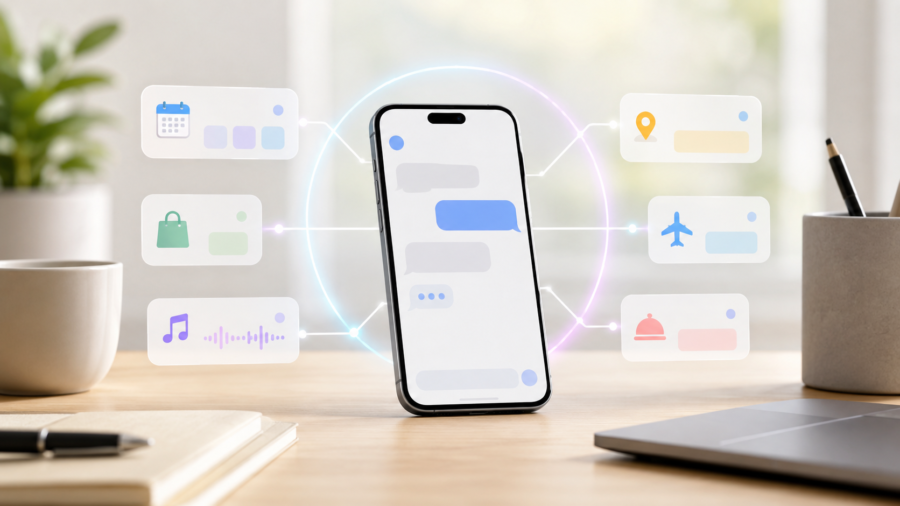
Messaging apps are becoming more than places to send texts.
They are slowly turning into places where users can get support, manage tasks, make plans and interact with AI assistants without opening a separate app.
That is why Poke’s approval for Apple Messages for Business matters.
According to TechCrunch, Poke has become the first AI agent approved to run on Apple’s Messages for Business platform. The startup lets people use AI agents through simple text messages, and it already works through SMS, Telegram and, in some markets, WhatsApp. Apple approval now allows Poke to add an iMessage-based experience through Messages for Business.
This is not the same as Apple launching a public AI chatbot inside Messages for everyone. It is more specific: an AI agent approved to operate through Apple’s business messaging system.
But the bigger signal is important. Everyday apps are moving toward AI assistants that can help users complete tasks inside familiar interfaces.
What is Poke
Poke is an AI assistant designed to work through text messaging.
Instead of asking users to open a complex AI dashboard or learn a new workflow, Poke lets users interact with an AI agent through simple messages. TechCrunch reports that Poke can help with common activities such as daily planning, calendar management, health and fitness tracking, smart home control and photo editing through text-based requests.
The idea is to make AI feel less like a separate product and more like a normal conversation.
That is important because many people do not want to manage another app, another login or another interface. They want AI to appear where they already spend time.
For many users, that place is messaging.
What is Apple Messages for Business
Apple Messages for Business is a system that lets users communicate with companies through the Messages app.
It has been used by businesses such as airlines, retailers, hotels and service providers for customer support, appointment scheduling, product help and other interactions. It supports automated responses, structured messaging and live human support when needed.
Poke’s approval is notable because Messages for Business was originally focused on business-to-customer communication, not standalone third-party AI agents.
TechCrunch says Poke is the first AI agent approved to run on the platform. AppleInsider also describes Poke as the first third-party AI agent officially available through iMessage via Messages for Business.
That means Apple is allowing at least one AI assistant to operate inside its messaging environment, but under platform rules and review.
Why this matters for everyday apps
The most important part of this story is not only Poke itself.
The important part is the direction apps are moving.
For years, apps were separate destinations. You opened a calendar app to manage your schedule, a smart home app to control devices, a fitness app to check activity and a photo app to edit images.
AI agents could change that pattern.
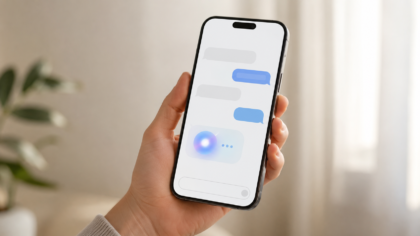
If an AI assistant can understand a request and connect to different services, the user may not need to jump between apps as often. They may simply send a message such as asking to plan the day, summarize a schedule or help with a small task.
Messaging becomes the command center.
That is why Poke’s move into Apple Messages matters. It shows how AI agents may become part of everyday app behavior instead of staying inside separate AI apps.
Why messaging is a natural home for AI agents
Messaging is one of the simplest interfaces people already understand.
You type. You receive a reply. You continue the conversation.
That makes messaging a natural place for AI assistants. Users do not need to learn a new menu system. They do not need to understand prompts deeply. They can describe what they want in normal language.
This is especially useful for AI agents because agents often work through multi-step tasks.
A user may ask a question, add details, change the plan and confirm an action. That feels natural in a message thread.
For example, a user might ask an AI assistant to help plan an afternoon, then adjust the plan based on weather, calendar availability or reminders. A messaging interface can support that back-and-forth easily.
How this differs from a normal chatbot
A normal chatbot usually answers questions.
An AI agent is meant to do more. It can understand goals, use tools and help complete tasks over time.
That difference matters.
A chatbot might tell you what a calendar is. An AI agent might help organize your calendar. A chatbot might explain smart home devices. An agent might help control them if permissions are available. A chatbot might give photo editing advice. An agent might help start or guide the edit.
Poke’s positioning is based on that agent idea: AI that helps users act through a familiar message flow.
This is why AI agents are becoming one of the most important app trends of 2026.
Why Apple approval is important
Apple is known for controlling platform experiences carefully.
That makes Poke’s approval more meaningful than a normal app launch.
TechCrunch reports that getting Apple’s approval required Poke to meet Messages for Business standards, including clear identification as an AI agent and the ability to offer live support if needed. Poke also had to customize parts of its experience to match Apple’s interface guidelines.
This matters because AI agents inside messaging apps can affect user trust.
If users are going to interact with an AI assistant inside Messages, they need to understand what it is, what it can do and whether a human can help when needed.
A controlled approval process may slow down launches, but it can also reduce low-quality or confusing experiences.
What users may be able to do with messaging AI agents
Messaging AI agents could support many everyday tasks.
They may help users plan schedules, organize reminders, manage simple lists, summarize information, control connected devices, prepare messages or guide users through app actions.
Business-focused agents may help with customer support, bookings, order updates, appointments and product questions.
Consumer-focused agents may help with daily organization and personal tasks.
The most useful versions will feel practical, not flashy. Users may not care that something is called an “agent.” They will care whether it saves time.
Why this could change customer support
Apple Messages for Business is already connected to customer support.
That makes AI agents especially interesting in this context.
Many people dislike calling support lines or navigating long help pages. If AI agents can answer common questions inside a trusted messaging interface, support may feel faster and more natural.
But there is a limit.
AI support should not trap users in automated loops. Apple’s business messaging model has historically included live agent support as part of the experience, and TechCrunch reports that Poke’s approval process included the need to provide live support if necessary.
That human fallback is important. AI can handle routine tasks, but sensitive or complex problems still need people.
The privacy and trust question
AI agents in messaging apps raise trust questions.
Users may ask what data the assistant can see, how long conversations are stored, what services it can connect to and whether it can take actions without clear permission.
Those questions matter because messaging is personal.
A user may discuss schedules, contacts, health routines, home devices or private plans inside a chat. If an AI agent connects to those areas, permissions must be clear.
The best AI agents will be transparent about what they can access and what they cannot do.
Users should also be careful with sensitive information. Even if an assistant is convenient, people should avoid sharing passwords, one-time codes, financial details or private documents unless they clearly understand the security model.
Why this matters before Apple’s AI updates
The timing is interesting because Apple’s AI strategy is under close attention.
TechCrunch notes that Poke’s Messages for Business approval came just before Apple’s expected developer conference, where Apple was expected to discuss AI-optimized Siri updates and developer tools.
That does not mean Poke tells us exactly what Apple will do next.
But it does show that Apple’s ecosystem may have more room for AI agents than before, especially when they fit inside approved platform channels.
For users, the question is whether Apple will make AI feel useful in normal app experiences, not only through big announcements.
Why app developers should pay attention
Developers should watch this trend closely.
If messaging becomes a major interface for AI agents, apps may need to think differently about user interaction.
Instead of building only screens, buttons and menus, developers may build conversational flows. Instead of making users open an app for every small task, developers may let AI agents trigger actions from a message thread.
This could affect productivity apps, travel apps, fitness tools, customer support platforms, shopping services and smart home systems.
The strongest apps may be the ones that combine a good visual interface with a useful AI conversation layer.
What ordinary users should watch for
Users should watch for three things as AI agents enter messaging apps.
First, clarity. The app should clearly say when a user is talking to AI.
Second, control. Users should know what the agent can access and what actions it can take.
Third, usefulness. The agent should save time or solve a real problem, not simply add another notification stream.
If those three things are handled well, messaging AI agents could become genuinely helpful.
If they are handled poorly, users may find them intrusive or confusing.
The bigger takeaway
Poke becoming the first AI agent approved for Apple Messages for Business is a small product milestone with a larger meaning.
It shows that AI agents are moving into everyday apps and familiar interfaces.
Instead of asking users to visit a separate AI product, companies are trying to bring AI into the places people already use: messaging apps, phone apps, social apps, business dashboards and productivity tools.
For Apple users, Poke’s approval suggests that Messages may become one of the places where AI agents appear in a controlled way.
For the wider app world, the direction is clear. The next generation of apps may not only wait for taps and clicks. They may help users complete tasks through simple conversations.
Comments
You can write your views about this story. Comments may be moderated according to site settings.