
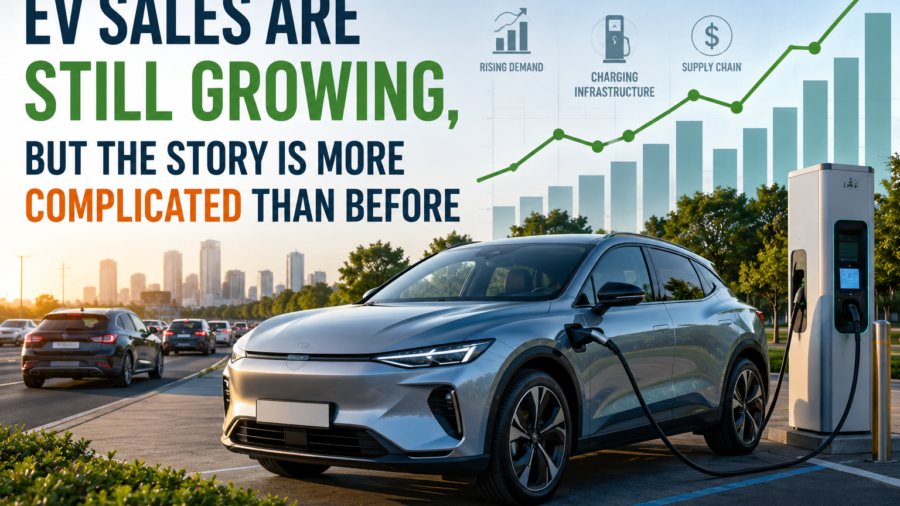
Electric vehicle sales are still growing, but the story is no longer as simple as “everyone is switching to EVs.”
A few years ago, the electric car market looked like it was moving in one clear direction. More models were launching, governments were pushing cleaner transport and drivers were becoming more familiar with battery-powered cars.
That growth has not disappeared.
The International Energy Agency says the global electric car market reached new highs in 2025, with sales growing by 20% from the previous year and passing 20 million vehicles. The agency also expects electric car sales to keep rising in 2026.
But behind those big numbers, the market has become more uneven.
Some buyers are ready for a full electric car today. Others are still worried about price, range, charging access or long-distance travel. Some markets are growing quickly, while others are slowing or changing direction. Hybrids are also getting renewed attention from drivers who want better fuel economy without fully depending on chargers.
So yes, EV sales are still growing. But the next phase of the electric car market looks more complicated than the first one.
Why EV Growth Is Still Real
The first thing to understand is that electric cars are not disappearing from the market.
Global sales remain high, and automakers continue to invest in electric platforms, batteries, software and charging partnerships. More drivers are becoming familiar with EVs, and many people who have home charging find electric cars convenient for daily use.
For city driving and regular commuting, an EV can make sense. Charging overnight at home is often easier than visiting a fuel station. Electric cars are also quieter, smoother and often cheaper to run per mile depending on local electricity and fuel prices.
Governments in many regions still see EVs as part of their long-term transport plans. Automakers also know that software, battery technology and electrification are becoming central to the future of the industry.
That is why the bigger picture still points toward growth.
The question is not whether EVs matter. They clearly do. The question is how quickly different types of drivers are ready to switch.
Why the Market Feels More Uncertain
The electric car market feels uncertain because buyers are asking more practical questions.
Early EV adopters were often more comfortable with new technology. They were willing to plan around charging, learn about range and accept some trade-offs. The next wave of buyers may be more cautious.
These drivers may like the idea of an EV but still wonder whether it fits their life.
Can they charge at home? Is the public charging network reliable in their area? Will the car handle long trips easily? Is the price low enough? What happens to battery value after several years? Will insurance or repair costs be higher?
These are normal questions.
For EV sales to keep growing strongly, the market needs to satisfy more ordinary drivers, not only technology enthusiasts or early adopters.
That is why the conversation has moved from “EVs are the future” to “Which EV works for real life?”
Charging Access Is Still a Big Divide
Charging is one of the biggest factors shaping EV demand.
For people with a driveway, garage or private parking space, EV ownership can be simple. They can charge at home overnight and start most days with enough range.
For renters, apartment residents and people who park on the street, the experience can be very different. They may depend on public chargers, workplace charging or fast-charging stations. If those chargers are expensive, busy, broken or inconvenient, the EV experience becomes less attractive.
This creates a divide.
Two drivers can look at the same electric car and have completely different reactions. One sees convenience. The other sees uncertainty.
Until charging access feels easier and more reliable for more people, EV growth may continue unevenly.
Price Still Matters
Electric cars are becoming more common, but price remains one of the biggest barriers.
Some EVs are now more affordable than before, and the used EV market is growing. But many drivers still see electric cars as expensive compared with petrol, diesel or hybrid alternatives.
The upfront price matters because car buying is not only about long-term running costs. A vehicle may be cheaper to run over time, but if the purchase price is too high, many buyers will not get that far.
This is especially important for families and budget-conscious drivers. They may need a practical car with enough space, good range and a reasonable price. If the EV option feels too expensive, they may choose a hybrid or a traditional petrol model instead.
This is one reason affordable EVs are becoming such an important battleground for automakers.
The next phase of EV growth will depend heavily on whether more brands can offer electric cars that feel realistic for ordinary households.
Hybrids Are Part of the Story
The renewed interest in hybrid cars does not mean EVs have failed.
It means many drivers are looking for a middle step.
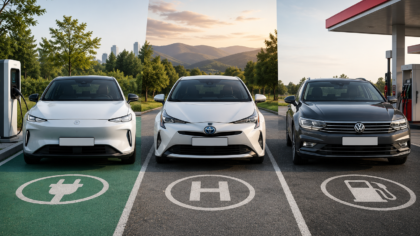
A regular hybrid can reduce fuel use without requiring charging. A plug-in hybrid can offer some electric driving while still keeping a petrol engine for longer trips. For drivers who are curious about electrification but not ready for a full EV, that can feel safer.
This is why the market is becoming more mixed.
Some people will go directly to fully electric cars. Some will choose plug-in hybrids. Some will choose regular hybrids. Others will wait for cheaper EVs, better charging or more familiar technology.
That does not make the transition weaker. It makes it more realistic.
Drivers do not all change habits at the same speed.
Regional Differences Are Getting Bigger
EV demand also depends heavily on where you live.
In some countries, EVs are becoming normal quickly because charging networks, incentives and model availability are strong. In other markets, adoption is slower because prices are higher, charging is less convenient or government support has changed.
China remains a huge part of the global EV story, with intense competition and many domestic brands. Europe is also pushing forward, although demand can vary between countries. The United States has a more mixed picture, with strong interest in some regions and more hesitation in others.
This is why broad headlines can be misleading.
A story saying EV demand is slowing may be true in one market but not globally. A story saying EV sales are booming may be true in another region but not everywhere.
The better way to understand EV sales is to look at the market as a collection of different speeds.
Automakers Are Adjusting Their Plans
Carmakers are responding to this more complicated market.
Some are still investing heavily in fully electric vehicles. Others are giving more attention to hybrids and plug-in hybrids. Many are trying to lower production costs, improve battery efficiency and build vehicles that can work across different markets.
This is a practical shift.
Automakers cannot assume that every buyer will move to a full EV at the same time. They need to offer options for people with different budgets, charging access and driving patterns.
That is why the future car market may not be simply electric versus petrol.
For several years, it may include a mix of fully electric cars, hybrids, plug-in hybrids and more efficient combustion models, depending on region and buyer needs.
What This Means for Drivers
For ordinary drivers, the complicated EV market is not necessarily bad news.
It means there are more choices.
A full EV may be ideal if you can charge at home, drive predictable distances and want lower running costs. A plug-in hybrid may work if you can charge regularly but still want petrol backup. A regular hybrid may be better if you want better fuel economy without changing your routine.
The important thing is to match the car to your life.
Do not buy an EV only because the market is growing. Do not avoid an EV only because some headlines say demand is uncertain. Look at your daily driving, charging options, budget and long-term plans.
The best choice is the one that fits your real routine.
Why the Next Phase Will Be More Practical
The first wave of EV excitement was about innovation.
The next wave will be about practicality.
Drivers will care less about big promises and more about simple questions. How far can it go? Where can I charge it? How much does it cost? How reliable is the software? What happens on a long trip? Is it comfortable for family use?
Automakers that answer these questions clearly will have an advantage.
Charging companies also have a role to play. More chargers are useful, but reliability, payment simplicity, location and comfort matter too. A charger that exists on a map but does not work when a driver arrives does not build confidence.
The EV market will keep growing, but growth will depend on solving everyday problems.
Final Takeaway
EV sales are still growing, but the market is becoming more complex.
The big global trend still favors electric vehicles. Sales are rising, automakers are investing and many drivers are finding EVs useful for everyday travel.
But the transition is not moving in one straight line.
Price, charging access, regional differences, hybrid demand and buyer confidence all shape what happens next. Some drivers are ready for full electric cars now. Others are choosing hybrids as a practical middle step. Many are waiting for cheaper models and better charging networks.
That does not mean the EV story is weak. It means the market is growing up.
The next stage will be less about hype and more about whether electric cars can fit ordinary lives easily, affordably and reliably.
Comments
You can write your views about this story. Comments may be moderated according to site settings.