
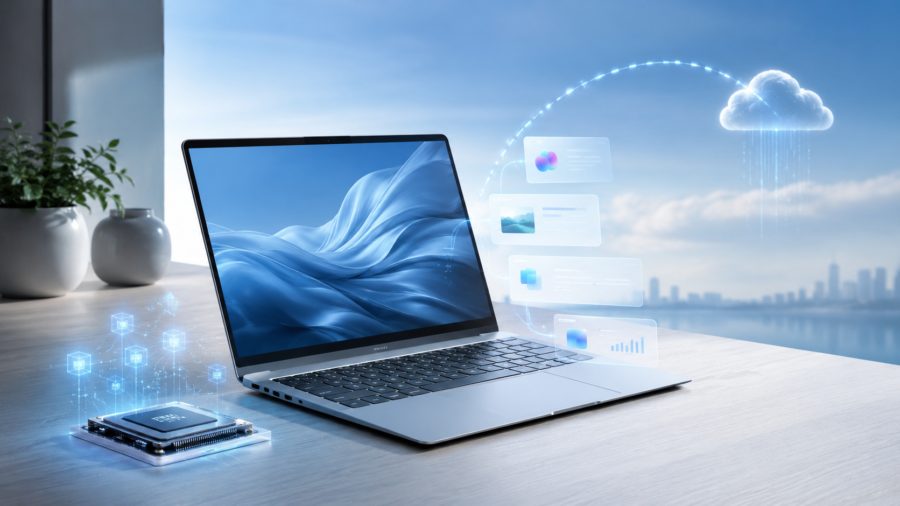
For years, Windows has been easy to take for granted.
It was the operating system people used for work, gaming, school, browsing and office apps. Important, but not always exciting. Much of the technology conversation moved toward smartphones, cloud apps, AI chatbots and Apple Silicon laptops.
Now Windows is becoming interesting again, and the reason is artificial intelligence.
At Microsoft Build 2026, Microsoft put Windows back near the center of its developer and AI strategy. The Verge described the event as a sign that Windows is back on Microsoft’s menu, especially as the company looks toward local AI, cloud-connected workflows and AI agents that can run across devices.
Microsoft also introduced new AI-focused developer hardware, including the Surface RTX Spark Dev Box. Microsoft says the device is powered by NVIDIA RTX Spark and can deliver up to 1 petaflop of AI compute with 128 GB of unified memory, allowing developers to build, test and run AI agent workloads locally without relying only on cloud GPU instances.
NVIDIA framed RTX Spark as part of a new generation of Windows PCs built for personal AI agents. That shift matters because the PC is no longer just a place to open apps. It may become a place where AI assistants run locally, understand context and help users complete tasks across software.
Why Windows lost some of its shine
Windows never stopped being important, but it did stop feeling like the center of the future.
Smartphones became the most personal computers in people’s lives. Cloud apps made the operating system feel less visible. Apple Silicon changed expectations around battery life and laptop performance. AI chatbots appeared mostly through browsers and apps, not through the operating system itself.
For many users, Windows became something in the background.
That is not necessarily bad. A good operating system should often stay out of the way. But it also meant Microsoft needed a new reason for Windows to matter in the next computing wave.
AI may be that reason.
What makes the AI PC era different
An AI PC is not just a normal computer with a chatbot installed.
The idea is that more AI tasks can run directly on the device, using local chips such as GPUs, NPUs or specialized AI hardware. Some tasks may still use the cloud, but not everything needs to leave the computer.
This matters for three reasons: speed, privacy and cost.
If an AI task runs locally, it may respond faster because it does not need to wait for a remote server. It may also keep more data on the device, which can help with privacy when designed correctly. For developers and companies, local AI may also reduce dependence on expensive cloud GPU resources.
Microsoft’s Build 2026 messaging focused heavily on this hybrid model: local where possible, cloud where necessary.
That is where Windows becomes important again. If AI is going to run across local devices, cloud services, files, apps and developer tools, the operating system becomes a key layer.
Why RTX Spark matters for Windows
NVIDIA’s RTX Spark is one of the clearest signs of the new AI PC direction.
NVIDIA says RTX Spark powers Windows PCs purpose-built for personal AI agents, combining strong AI performance, unified memory and NVIDIA’s AI software stack. The company says the platform can support local personal agents and AI workloads on primary devices.
Microsoft’s Surface RTX Spark Dev Box is aimed mainly at developers, not ordinary shoppers. But developer hardware often shows where the platform is going.
If developers can build and test AI agents locally on Windows, more AI-powered apps may eventually appear for regular users.
That could include better coding tools, local document assistants, creative AI apps, personal productivity agents and software that can reason over files without sending everything to the cloud.
For Windows, this is a major opportunity. The PC has the screen, keyboard, storage, files and professional software that many AI workflows need.
Why local AI does not replace the cloud
It is easy to think local AI means cloud AI is going away. That is not true.
The biggest models still need large data centers. Many advanced tasks will continue to depend on cloud infrastructure. Cloud AI also allows companies to update models quickly and serve users across many devices.
But local AI changes the balance.
A laptop or desktop may handle smaller tasks on its own, while larger tasks move to the cloud. A personal assistant might summarize local files on the device, then call a cloud model for a more complex request. A developer might test an AI workflow locally before scaling it in the cloud.
This hybrid approach may become the normal AI experience.
Windows is well positioned for that because it already connects local files, business apps, cloud accounts, developer tools and hardware from many PC makers.
Why AI agents make the operating system matter
AI agents are one of the biggest reasons Windows could become more important.
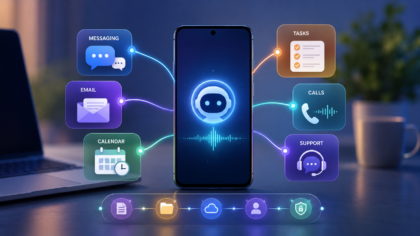
A simple chatbot answers questions. An AI agent can plan steps, use tools and help complete tasks. That means an agent may need access to apps, files, permissions, calendar data, email, browsers and system controls.
This creates a new problem: where should an AI agent live?
If it lives only inside one app, it may be limited. If it lives at the operating system level, it can connect more naturally across workflows. But that also raises security and privacy questions.
This is why Microsoft is trying to make Windows a trusted platform for development and agent workloads. Microsoft’s developer blog says Windows is being positioned as a place where developers can build, test and run AI and agent workloads locally.
In simple terms, Microsoft wants Windows to become a safe home for AI agents.
Why this matters for ordinary users
Most people will not buy an AI developer box. But they may eventually benefit from the shift.
A stronger AI PC platform could make everyday computers more helpful. A Windows laptop might summarize files, find settings, organize tasks, improve video calls, search personal documents more naturally or help with creative work without depending on the cloud for every action.
Students could use AI study tools that understand local notes. Workers could use assistants that help with meetings and documents. Creators could use local AI tools for editing. Developers could test AI apps without paying for as much cloud compute.
The key word is “could.” Many AI PC features still need better software, clearer privacy controls and real-world usefulness.
But the direction is clear: the PC is becoming a more active computing device again, not just a screen for cloud services.
Why Windows still has challenges
Windows has advantages, but it also has problems to solve.
First, the hardware ecosystem is complicated. Unlike Apple, Microsoft does not control every Windows laptop. Device quality, battery life, cooling and AI performance can vary widely.
Second, users need a clear reason to care. “AI PC” can sound like marketing if the features are not genuinely useful. Microsoft and PC makers need to show practical benefits, not just performance numbers.
Third, privacy must be handled carefully. If AI agents can access files, email, calendars or app data, users need clear permission controls. They should know what happens locally, what goes to the cloud and what the assistant is allowed to do.
Fourth, compatibility matters. Windows users expect their apps, games, plugins and accessories to work. Any AI PC shift must preserve that trust.
Why this could reshape laptop buying
AI may become a bigger part of laptop buying decisions over the next few years.
In the past, people compared processors, RAM, storage, battery life, screen quality and price. Those still matter. But buyers may also start asking new questions.
Can this computer run AI tasks locally?
Does it have enough memory for AI apps?
Does it support useful AI features without draining battery?
Can it protect private data while using AI?
Will the apps I use take advantage of the hardware?
Those questions are exactly why Windows matters again. Microsoft has to help users, developers and hardware makers understand what an AI PC is actually good for.
The bigger takeaway
Windows is becoming important again because AI is bringing computing back to the device.
The cloud is still essential, but local AI, personal agents and hybrid workflows make the operating system more valuable. The PC is no longer only a place to open apps. It may become a place where AI runs, reasons, remembers context and helps users act across software.
Microsoft’s Build 2026 announcements, NVIDIA’s RTX Spark platform and the broader AI PC push all point in the same direction.
Windows has a chance to become the main workspace for personal AI agents. But Microsoft and PC makers still need to prove that the experience is useful, private, reliable and worth upgrading for.
The AI PC era will not be won by slogans. It will be won by computers that make daily work easier without making users think too much about the technology behind them.
That is why Windows matters again.

Comments
You can write your views about this story. Comments may be moderated according to site settings.