
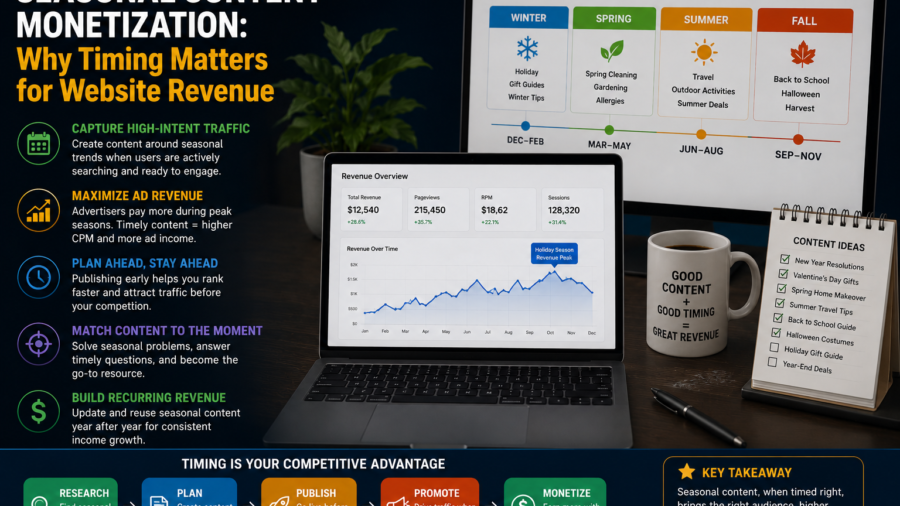
Seasonal content can be one of the most overlooked ways to grow website revenue.
It is not only about holidays. It can include travel seasons, shopping events, school periods, sports calendars, religious occasions, tax deadlines, app launches, weather changes, product cycles and annual trends.
The idea is simple.
People search for certain topics at certain times of the year. If your website has useful content ready before interest peaks, you may capture traffic when demand rises.
That traffic can then be monetized with ads, affiliate links, sponsored placements or product recommendations.
But seasonal content is easy to get wrong.
Publishing too late, copying generic ideas, overloading the page with ads or chasing topics that do not match your audience can waste time. The best seasonal monetization strategy is not about rushing after trends. It is about planning early, matching real user intent and keeping the page useful when traffic arrives.
Disclosure: This article contains a sponsored affiliate link. If you register through the link below, we may receive a commission at no extra cost to you.
Start Monetizing With Adsterra
What Is Seasonal Content?
Seasonal content is content that becomes more relevant during a specific period.
A travel website may publish summer holiday guides before peak booking season. A tech blog may prepare shopping guides before Black Friday. A finance blog may publish tax preparation explainers before filing deadlines. A food site may prepare recipes before Ramadan, Christmas, Thanksgiving or other major events.
The content may be evergreen for most of the year, but its traffic potential rises during a predictable window.
This is what makes seasonal content powerful.
Instead of guessing what readers might want, publishers can study recurring patterns. If a topic becomes popular every year, the website can prepare content before users start searching heavily.
Timing is the advantage.
Why Seasonal Content Can Monetize Well
Seasonal content can monetize well because user intent is often strong.
A person searching for a holiday booking guide may be planning a trip. Someone reading a Black Friday buying guide may be ready to compare products. A reader looking for Ramadan timetables, school schedules or travel checklists may need practical information quickly.
That intent can support ad revenue because the page attracts focused attention.
But traffic alone is not enough.
The content must actually help the reader. It should answer the question clearly, load quickly and remain easy to use on mobile. If the article is thin, late or buried under ads, the opportunity can disappear quickly.
Seasonal traffic often arrives in waves. A publisher needs to be ready before the wave starts.
Planning Early Is the Main Advantage
The biggest mistake with seasonal content is publishing too late.
If a topic peaks in June, writing the article in late June may miss much of the demand. Search engines need time to discover, crawl, index and understand pages. Readers also begin researching before the actual event or season.
A better strategy is to publish early.
For major seasonal topics, content should often be prepared weeks or months before peak demand. Then it can be updated as the season approaches.
For example, a travel site planning summer holiday content should not wait until the middle of summer. A website monetization blog planning Black Friday ad strategy should not wait until the week of Black Friday.
Seasonal content rewards preparation.
Choose Seasonal Topics That Match Your Website
Not every seasonal topic is worth chasing.
A website about Android apps should not suddenly publish random Christmas recipes unless there is a clear connection. A travel blog should not chase every shopping event. A website monetization blog should not cover every celebrity trend just because it is popular.
Seasonal content works best when it fits the site’s existing audience.
For a travel site, seasonal topics might include summer holidays, airport transfer guides, beach packing checklists, winter sun destinations or hotel booking tips.
For an apps site, seasonal topics might include travel apps before summer, focus apps before exam season, budgeting apps before the new year or photo editing apps before holiday periods.
For a website monetization site, seasonal topics might include ad revenue planning before major shopping events, content calendars for seasonal traffic or how publishers can prepare for Discover spikes.
The topic should feel natural, not forced.
Search Intent Matters More Than the Season
A seasonal topic is only useful if it answers a real question.
Do not create content only because a season is coming. Create content because users need something during that season.
For example, “Summer Is Coming” is too vague.
A better topic would be:
How to Choose an All-Inclusive Resort Without Overpaying
Best Types of Travel Apps to Install Before a Holiday
How to Prepare Your Website for Black Friday Ad Traffic
How to Plan Seasonal Content Before Search Demand Peaks
These topics solve problems.
Search intent should guide the article structure. If readers want a checklist, give them a checklist. If they want a comparison, compare options clearly. If they need a step-by-step guide, make the steps easy to follow.
Seasonal content should be practical, not decorative.
Update Seasonal Articles Instead of Starting From Zero
A strong seasonal article can be reused and improved.
If a page performed well last year, do not abandon it. Review the content, update outdated information, improve headings, refresh examples, check links and make the article more useful for the new season.
This can be better than creating a brand-new page every year.
A mature URL may already have search history, backlinks, internal links and topic relevance. Updating it carefully can preserve that value while keeping the content fresh.
However, avoid fake freshness.
Do not just change the year and leave outdated advice. The update should genuinely improve the article.
Seasonal content should become stronger over time.
Monetization Should Match the Page Type
Different seasonal pages need different monetization setups.
A long guide can support more ad placements than a short timetable or checklist. A product comparison may include affiliate links. A travel guide may include hotel booking tips or travel app recommendations. A website monetization article may include ad network referral links.
The ad strategy should match the page.
If the page gives quick information, keep ads light and avoid blocking the answer. If the page is a detailed guide, place ads at natural breaks. If the page has strong commercial intent, affiliate or referral links may be useful, but they should be disclosed.
Do not add every possible monetization method to one page.
A crowded seasonal page can lose trust quickly.
Mobile Experience Is Critical
Seasonal traffic often arrives from mobile devices.
Readers may be traveling, shopping, planning, commuting or checking information quickly. They may not have patience for slow pages, pop-ups or confusing layouts.
A seasonal article should be easy to use on a phone.
The headline should be clear. The opening answer should appear quickly. Paragraphs should be short. Images should load properly. Ads should not cover the main content.
This is especially important if the page receives traffic from Google Discover or social platforms.
A fast mobile page can keep readers engaged. A slow, cluttered page can waste the traffic spike.
Be Careful With Aggressive Ads
When seasonal traffic rises, publishers may be tempted to increase ad intensity.
That can be risky.
Aggressive interstitials, repeated pop-ups, misleading ad placements or ads that block the content can damage user experience. A seasonal visitor often wants a quick answer. If the page makes that hard, they may leave and never return.
This does not mean publishers should avoid ads.
It means ads should be placed with care.
A good starting setup might include one placement after the introduction, one mid-article placement for longer content and one near the end. More intrusive formats should be tested slowly, with attention to mobile behavior.
Short-term revenue should not destroy long-term trust.
Build Internal Links Around Seasonal Topics
Seasonal content should not stand alone.
A travel article about summer holidays can link to resort guides, packing checklists, offline maps and travel app articles. A website monetization article about seasonal traffic can link to ad placement guides, Adsterra publisher stories and Google Discover monetization tips.
Internal links help readers continue to useful related content.
They can also improve session depth and support the wider topic cluster.
The best internal links answer the reader’s next question.
If someone reads about seasonal content monetization, they may next want to know how niche blogs turn search traffic into ad revenue or how to monetize Google Discover traffic without hurting user experience.
Measure the Season After It Ends
Seasonal content strategy should not stop when the season ends.
After the traffic wave passes, review what happened.
Which pages gained impressions? Which pages received clicks? Which articles held attention? Which ad placements performed best? Which topics did not work? Which queries appeared in Search Console? Which pages should be updated for next year?
This review is where the next season’s strategy begins.
A publisher that learns from each season can improve every year.
Instead of guessing, the site builds a seasonal content calendar based on real data.
What Small Publishers Should Avoid
Small publishers should avoid chasing every seasonal event.
Focus is better.
Choose the seasonal topics that fit your site, audience and monetization model. Do not publish thin articles just because a keyword is trending. Do not use misleading headlines. Do not overload seasonal pages with ads. Do not promise guaranteed earnings from ad networks.
Also avoid publishing too late.
Seasonal content is most useful when it is ready before users need it.
A small site can compete better by being early, specific and helpful.
Final Takeaway
Seasonal content monetization works best when timing, usefulness and user experience come together.
A seasonal topic can bring strong traffic when readers are actively searching for answers. But the content must be prepared early, matched to real search intent and supported by a clean mobile experience.
Ads can help monetize the traffic, but they should not make the page harder to use.
If you want to test Adsterra as part of your website monetization strategy, you can start here:
Start Monetizing With Adsterra
The strongest seasonal strategy is not chasing every trend.
It is preparing useful content before demand peaks, keeping the page readable and learning from each season so the next one performs better.





Comments
You can write your views about this story. Comments may be moderated according to site settings.