

Adding ads to a blog can feel like the obvious next step once traffic starts to grow.
You publish articles, visitors arrive, and now you want the website to earn something back. That is reasonable. Hosting, tools, content production and time all cost money.
But adding ads without a plan can create problems.
A blog that was clean and readable can suddenly feel crowded. Mobile pages may slow down. Readers may leave faster. Search visitors may struggle to find the answer they came for. The site may start earning a little more in the short term while losing trust in the long term.
That is why publishers should build a simple blog monetization plan before adding ads.
The goal is not to avoid monetization. The goal is to monetize in a way that protects the site’s future.
Disclosure: This article contains a sponsored affiliate link. If you register through the link below, we may receive a commission at no extra cost to you.
Start Monetizing With Adsterra
Start With Your Traffic Reality
Before adding ads, look at your current traffic.
How many visitors does the site receive each day? Which pages get the most views? Are visitors coming from Google Search, Google Discover, social media, direct visits or referrals? Are they mostly on mobile or desktop? Which countries send the most traffic?
These questions matter because ad revenue depends heavily on traffic quality.
A blog with steady search traffic may need a different ad strategy from a site that gets sudden Discover spikes. A mobile-heavy site needs different placement rules from a desktop-heavy site. A small blog with low traffic should not overload itself with ads before it has built trust.
Start by understanding what you already have.
Then build the ad plan around that reality.
Decide What You Want Ads to Do
Not every publisher has the same goal.
Some want to cover hosting costs. Some want to build a full-time publishing business. Some want to test a new ad network. Some want to combine display ads with affiliate links, sponsored posts or product recommendations.
Your goal affects your setup.
If the goal is light monetization, a few clean ad placements may be enough. If the goal is serious ad revenue, you may need a more structured testing plan, better analytics and more content volume.
Be honest about the stage your site is in.
A new blog should usually focus on content and traffic first. A site with stable traffic can test monetization more seriously.
Choose the Right Pages First
Do not add ads everywhere on day one.
Start with the pages that make the most sense.
Long evergreen articles are often better test pages because they have enough content to support natural ad breaks. A detailed guide can handle an ad after the introduction, another in the middle and possibly one near the end.
Short posts need more caution.
If a 400-word article has three ads, the page can feel thin and crowded. The reader may feel that the article exists only to carry ad placements.
A homepage should also stay relatively clean because it introduces the site. Category pages should help users browse, not feel like ad walls.
Start with long, useful articles where ads can fit naturally.
Protect the Reader’s First Impression
The first screen matters.
When someone lands on your blog, they should quickly understand the topic and see the beginning of the answer. If the first screen is blocked by ads, pop-ups or large empty ad spaces, the site may feel low quality.
This is especially important for search traffic.
A reader clicks because they want information. If they cannot access the content quickly, they may leave and choose another result.
A safer plan is to let the article begin first.
Place the first ad after the opening section or after a few paragraphs. This gives readers value before asking for attention.
Content should lead. Ads should follow.
Pick Ad Formats Carefully
Different ad formats create different experiences.
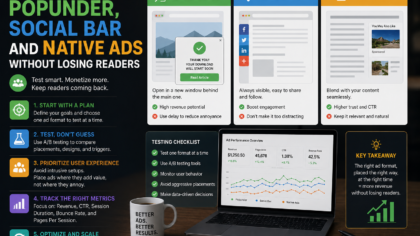
Banner and native ads are usually easier to control because they can sit inside the page layout. They may work well inside long articles if placed between sections and clearly labeled.
Social Bar or push-style formats may be more interactive, especially on mobile, but they should be tested carefully.
Popunder and interstitial-style formats are more sensitive because they can interrupt the user. They may perform in some niches, but they can also frustrate readers if used too early or too often.
The right format depends on your audience.
A how-to guide site should usually protect readability more aggressively than a viral entertainment site. A returning audience may tolerate fewer interruptions than one-time traffic.
Choose formats based on user experience, not only potential payout.
Create a Simple Testing Schedule
A monetization plan needs testing.
But testing should be controlled.
Do not add several formats at the same time. If you enable banners, native ads, Social Bar and Popunder on the same day, you will not know which one helped or hurt the site.
Start with one format.
Run it for a set period. Watch revenue, page speed, layout stability, mobile readability and user behavior. Then decide whether to keep it, adjust it or remove it.
After that, test another format.
This slower approach gives you cleaner information.
Good ad testing is not about moving fast. It is about learning clearly.
Set Mobile Rules Separately
Mobile traffic needs its own rules.
A placement that looks fine on desktop may feel too large on a phone. A sticky ad may cover too much screen space. A pop format may feel more aggressive. A banner may push the article too far down.
Before approving any placement, open the page on a real phone.
Check whether the title appears quickly. Read the first section. Scroll through the article. Look for layout jumps. Check whether ads sit too close to buttons or links.
If the mobile page feels annoying, the ad setup is not ready.
Most readers will not judge your site from your desktop editor. They will judge it from their phone.
Keep Page Speed in the Plan
Ads can slow down a website.
They may add scripts, images, tracking calls or delayed layout changes. If ads make the page jump while the reader is scrolling, the site feels unstable.
Before adding ads, test important pages. After adding ads, test them again.
You do not need to obsess over every technical score, but you should know whether the page still loads quickly and remains easy to read.
A slow website can lose readers before ads even have a chance to perform.
Sometimes fewer ads on a faster page can be better than many ads on a page users abandon.
Make Sponsored Links Transparent
If your monetization plan includes referral or affiliate links, transparency matters.
Add a short disclosure near the link. Tell readers that you may receive a commission if they register or buy through your link.
The link should also use proper attributes such as:
rel="sponsored nofollow noopener"
This helps make the commercial relationship clear.
Affiliate links can be useful, but they should not be hidden. A reader who trusts your content is more valuable than a visitor who clicks once and never returns.
Honesty supports long-term monetization.
Match Monetization to Content Type
Different content types need different monetization plans.
How-to guides should stay clean because readers want direct answers. Travel guides can include ads and affiliate links if they are relevant and clearly disclosed. Website monetization articles can include referral buttons, but they should not promise guaranteed income. App guides can link to useful tools, but they should avoid unsafe or misleading claims.
The ad plan should match the reader’s intent.
If the reader is trying to solve a problem, avoid blocking the solution. If the reader is comparing tools, make disclosures clear. If the reader is browsing a long guide, use natural breaks.
Monetization should fit the page, not fight it.
Build Internal Links Before Adding More Ads
Internal links can increase the value of each visit.
If a reader lands on a guide about mobile traffic, they may also want to read about ad format testing. If they read a post about Adsterra publisher stories, they may also want a practical setup guide.
Good internal links help readers continue naturally.
This can improve session depth and make the site more useful. It also gives ads more chances to be seen without forcing extra placements onto one page.
Before adding more ads, ask whether the site already guides readers to related content.
Sometimes better internal linking can improve monetization more safely than adding another ad block.
Track the Right Numbers
Revenue is important, but it is not the only number.
A good monetization plan should track page views, engagement, mobile behavior, ad revenue, page speed and top traffic sources. If possible, compare performance before and after each ad change.
Look for trade-offs.
If revenue increases slightly but engagement drops sharply, the format may not be worth it. If an ad placement earns well without hurting reading behavior, it may be a keeper.
Do not judge a plan only by one strong day.
Traffic changes. Ad demand changes. Seasonal topics rise and fall. Look for patterns over time.
Avoid the “More Ads Means More Money” Trap
More ads do not always mean more revenue.
Too many ads can reduce user trust, lower page views per session and make the site feel cheap. Readers may leave faster, install ad blockers or avoid returning.
A crowded site can also weaken brand value.
The smartest publishers think about lifetime value, not only today’s ad earnings. A reader who returns many times is worth more than a reader who leaves after one overloaded page.
Your monetization plan should set limits.
Decide how many ads are acceptable for short posts, long guides, homepages and mobile pages. Then follow those limits unless testing proves a better approach.
Create a Basic Monetization Checklist
Before adding ads to a blog, review these questions:
Which pages will be tested first?
Which ad format will be tested first?
Where will the first placement appear?
Will the content remain visible on mobile?
How will page speed be checked?
How long will the test run?
Which metrics will be reviewed?
Are affiliate links disclosed?
Are sponsored links marked correctly?
What is the maximum ad density for short articles?
This checklist prevents random decisions.
It also makes it easier to improve the setup later.
When to Add More Ads
Add more ads only after the first setup is stable.
If readers are still engaging, pages still load well and revenue is improving, you can test another placement. If the site feels slower or users leave faster, fix that before adding more.
Growth should be gradual.
Start with a simple setup. Learn from it. Expand carefully.
A blog monetization plan should feel like building a system, not throwing ads at every empty space.
Final Takeaway
A blog monetization plan helps publishers earn from ads without damaging the site they are trying to grow.
Before adding ads, understand your traffic, choose the right pages, protect the first screen, test one format at a time, check mobile layout, watch speed and use transparent sponsored links.
If you want to test Adsterra as part of your monetization strategy, you can start here:
Start Monetizing With Adsterra
The best monetization plan is not the one with the most ads.
It is the one that earns money while keeping the blog fast, readable and trustworthy.





Comments
You can write your views about this story. Comments may be moderated according to site settings.