

Adsterra can look attractive to small publishers who want to start earning from website traffic.
The idea is simple. You have a blog, news site, guide website or niche content project. People visit your pages. You add ads. The site begins to earn money.
But website monetization is rarely that simple in practice.
A small publisher needs more than an ad network account. You need traffic, useful content, a readable mobile layout, clean ad placement and realistic expectations. If you add ads too early or too aggressively, the site may look less trustworthy before it has a chance to grow.
Adsterra can be one option to test, especially for publishers who want different ad formats and an alternative to traditional display networks. But it should be used carefully.
The goal is not to cover every part of the page with ads.
The goal is to earn from your traffic without making readers regret visiting your site.
Disclosure: This article contains a sponsored affiliate link. If you register through the link below, we may receive a commission at no extra cost to you.
Start Monetizing With Adsterra
What Adsterra Offers Publishers
Adsterra is an ad network that gives publishers several ways to monetize traffic.
Depending on the website and setup, publishers may test formats such as display banners, native-style ads, social bar placements, popunder ads, in-page push, interstitial-style formats and other options.
That variety is useful, but it also creates a challenge.
Not every ad format is right for every site.
A small how-to blog needs a cleaner experience than a fast-moving entertainment site. A travel guide may need softer placements than a viral news page. A website monetization article can include referral buttons, but those buttons should be disclosed properly.
The best format is not the one that sounds most powerful.
It is the one that fits your audience without damaging the page.
Small Publishers Should Start With Traffic First
Ads need traffic before they can produce meaningful revenue.
This sounds obvious, but many new publishers skip this step. They install ads on a site with only a few daily visitors, then feel disappointed when revenue is low.
Adsterra, or any ad network, cannot replace audience building.
Before focusing too heavily on monetization, small publishers should ask:
Do people visit the site regularly?
Which pages get the most traffic?
Where does the traffic come from?
Is the site mostly mobile or desktop?
Which countries send visitors?
Do readers stay and scroll?
A site with focused search traffic may be easier to monetize than a site with random traffic that leaves quickly.
Content still comes first.
Choose the Right Pages for Your First Test
A small publisher should not add ads everywhere at once.
Start with pages that can support ads naturally. Long evergreen articles, detailed guides and useful explainers are often better test pages than short posts.
A 1,200-word article can usually handle one ad after the introduction and one in the middle. A short 300-word post may feel crowded with the same setup.
The page type matters.
How-to guides should stay clean because readers want answers. News-style articles should show the main story quickly. Product or tool pages should avoid confusing ads with buttons or calls to action.
Choose a small group of pages first. Test there. Then expand if the results make sense.
Start With Less Intrusive Formats
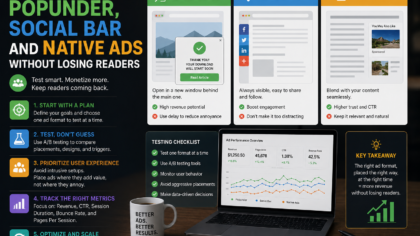
For many small publishers, less intrusive formats are the safest starting point.
Native-style placements and display banners can be placed inside the article flow without blocking the reader. They are easier to control and easier to evaluate.
More aggressive formats, such as popunder or interstitial-style placements, need more caution.
They may produce revenue in some niches, but they can also frustrate users quickly. This is especially true on mobile, where screen space is limited and interruptions feel stronger.
If you are just starting with Adsterra, begin with a simple setup.
Do not activate every format on the first day.
Mobile Experience Matters More Than You Think
Small publishers often check their site on desktop because that is where they work.
Readers may not see it that way.
Many visitors arrive on a phone, especially from search, Discover, social media or messaging apps. A layout that looks fine on a laptop can feel crowded on a mobile screen.
Before keeping any ad placement, open the page on a phone.
Check the first screen. Can the reader see the title and opening section? Does the ad push the article too far down? Does the page jump while loading? Is any ad too close to a button? Does a pop-up make the page feel unsafe?
If the mobile page feels annoying, the ad setup is not ready.
A small site cannot afford to lose trust on the first visit.
Do Not Hide the Content
The article should always be easy to read.
This is one of the simplest monetization rules, but it is also one of the easiest to break. Publishers sometimes place ads above the title, before the first paragraph, between every small section or over the content on mobile.
That may increase ad exposure briefly, but it can weaken the site.
A reader should understand the page before seeing too much commercial pressure. Let the content begin. Let the opening answer appear. Then place ads at natural breaks.
Content should feel like the main reason the page exists.
Ads should support the page, not take it over.
Be Honest About Sponsored and Referral Links
If you use an affiliate or referral link, tell readers.
A short disclosure is enough. It does not need to be dramatic. It simply tells readers that the publisher may earn a commission if they register through the link.
The link should also be marked properly with attributes such as:
rel="sponsored nofollow noopener"
This is good for transparency and safer for SEO.
It also makes the article feel more professional.
Readers do not usually mind affiliate links when they are clear and relevant. What damages trust is hiding the relationship or making exaggerated income claims.
Avoid Income Promises
Small publishers should be careful with income expectations.
Adsterra has publisher stories and examples, but those results depend on many factors: traffic volume, visitor location, niche, ad format, device type, user behavior and content quality.
Your site may perform differently.
That does not mean testing is pointless. It means testing should be realistic.
Do not write or believe claims like:
“Earn guaranteed money with Adsterra”
“Make passive income instantly”
“Any blog can earn thousands”
“Just add ads and get paid”
A better message is more honest:
Adsterra may help publishers monetize traffic, but results depend on the website.
That is the truth small publishers need.
Track More Than Revenue
Revenue is important, but it is not the only number.
When testing Adsterra, watch how readers behave. Do they leave faster after ads are added? Do pages load more slowly? Do mobile users scroll less? Are ads causing layout shifts? Are visitors clicking internal links less often?
A placement that earns a little but damages the page may not be worth keeping.
Track the full picture:
Revenue
Page views
Engagement
Mobile behavior
Page speed
Ad visibility
User complaints
Internal link clicks
The goal is not only higher revenue today. The goal is a site that can keep growing.
Use Adsterra as Part of a Larger Strategy
Adsterra should not be the whole business plan.
A strong publisher strategy usually includes useful content, search traffic, internal links, email or social distribution, good images, clean design and consistent publishing.
Ads are one monetization layer.
They work best when the website already has value.
A small publisher can also think about affiliate links, sponsored posts, digital products, newsletters or direct partnerships later. But ads are often a practical starting point because they can monetize general traffic.
Still, the content must earn the attention first.
Keep the Site Trustworthy
Trust is easy to lose.
A small site becomes weaker if it looks spammy, overloaded or misleading. Readers may not know your brand yet, so their first impression matters.
Keep the design clean. Use clear headlines. Avoid fake urgency. Do not use misleading images. Label sponsored links. Keep ad density reasonable. Make sure your About, Contact, Privacy Policy and Editorial Policy pages are easy to find.
This is especially important for websites trying to grow through Google Search or Google Discover.
A trustworthy site has a better chance of turning one visit into repeat traffic.
A Simple Starter Setup
A small publisher can start with a simple plan.
Choose three to five long articles with steady traffic. Add one native or banner placement after the introduction. Check the page on mobile. Watch performance for several days. If the page still feels clean, test one mid-article placement on longer posts.
Do not add popunder or interstitial-style formats until you understand your baseline.
Once you know how lighter formats perform, you can test stronger formats carefully on limited pages.
This slower approach is less exciting, but it gives better information.
It also protects your readers.
When Adsterra May Be a Good Fit
Adsterra may be worth testing if your site already has some traffic and you want an additional monetization option.
It may fit blogs, niche websites, content guides, entertainment sites, app-related content, tech explainers, travel guides or publisher-focused websites.
But fit depends on your audience.
If your readers are looking for careful how-to content, keep ads light. If your site has entertainment traffic, you may test more visible formats. If your traffic is mostly mobile, every placement needs extra review.
The right setup is always site-specific.
When to Wait Before Adding Ads
Sometimes the best decision is to wait.
If your site has very little content, almost no traffic, unfinished pages, slow loading, weak navigation or no privacy policy, adding ads may be too early.
First, build the foundation.
Publish useful articles. Improve categories. Add internal links. Make the site mobile-friendly. Create trust pages. Check page speed. Watch Search Console for early impressions.
Then add monetization.
A stronger site will usually monetize better than a rushed one.
Final Takeaway
Adsterra can be a useful option for small publishers, but it works best when used with a clear plan.
Start with traffic. Choose the right pages. Test less intrusive formats first. Check mobile layout. Keep the first screen readable. Disclose referral links. Avoid income promises. Track user behavior, not only revenue.
If you want to test Adsterra as a publisher, you can start here:
Start Monetizing With Adsterra
The smartest small publishers do not rush to fill every space with ads.
They build useful content, earn traffic, test carefully and protect reader trust while monetizing step by step.





Comments
You can write your views about this story. Comments may be moderated according to site settings.