
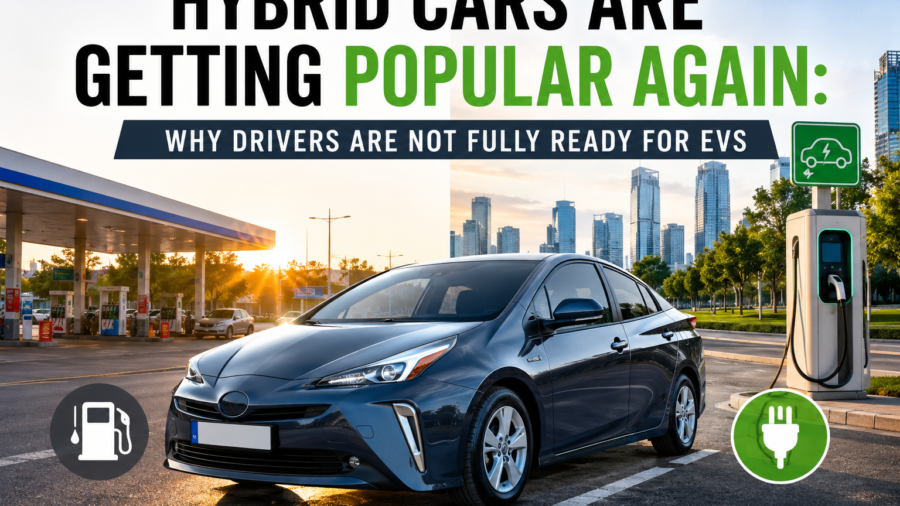
Hybrid cars are getting attention again, and the reason is not complicated.
Many drivers like the idea of an electric vehicle. They like lower running costs, quieter driving and the feeling of moving away from petrol or diesel. But when it comes time to actually buy a car, the decision can feel less simple.
Some people worry about charging. Some worry about price. Some live in apartments without a private driveway. Some take long trips and do not want to plan every stop around a charger. Others simply want better fuel economy without changing their driving habits too much.
That is where hybrids are finding their moment again.
A hybrid car sits between the old and the new. It still has a petrol engine, but it also uses an electric motor and battery to reduce fuel use. For many drivers, that feels like a practical middle step rather than a full leap into electric driving.
Why Hybrids Are Back in the Conversation
Electric vehicles are still growing globally. The wider EV market has not disappeared, and many countries continue to push toward cleaner transport. But the story is more complicated than a simple “everyone is going electric” headline.
Drivers are not all moving at the same speed.
Some buyers are ready for a full EV today. They have home charging, predictable routes and enough confidence in the charging network. For them, an electric car can make a lot of sense.
Other buyers are interested but hesitant. They may like the technology but not the practical trade-offs. They may not want to depend on public chargers. They may be unsure about battery range in winter, long-distance travel or resale value.
Hybrids appeal to this second group.
They offer some electric assistance without asking the driver to completely change how they use a car. You still fill up at a normal fuel station, but the car can use electric power in traffic, at low speeds or during certain driving conditions.
For people who want efficiency without lifestyle changes, that is a strong selling point.
What Is a Hybrid Car?
A hybrid car combines a petrol engine with an electric motor and battery.
Unlike a fully electric vehicle, a standard hybrid does not need to be plugged in. The battery is charged by the car itself, often through braking and engine operation. The system then uses electric assistance to improve fuel economy and reduce engine workload.
There are different types of hybrids.
A regular hybrid, sometimes called a self-charging hybrid, uses electric power in limited situations and does not require charging from a wall plug.
A plug-in hybrid, often called a PHEV, has a larger battery and can be charged externally. It may drive for a certain distance on electric power before the petrol engine is needed. But if the owner does not charge it regularly, it may not deliver the fuel-saving benefits people expect.
A mild hybrid is a smaller system that helps the engine but usually cannot drive the car on electric power alone.
For ordinary drivers, the important point is simple: not all hybrids work the same way.
Before buying or comparing, it is worth checking whether the car is a regular hybrid, plug-in hybrid or mild hybrid.
Why Some Drivers Are Not Fully Ready for EVs
Charging is the biggest reason many drivers hesitate.
An EV can be very convenient if you can charge at home. You plug in overnight, wake up with enough range and rarely need public charging for daily driving.
But not everyone has that option.
Apartment residents, renters, city drivers and people without private parking may depend on public chargers. That can make EV ownership feel less predictable. If chargers are busy, broken, slow or far away, the experience becomes frustrating.
Long-distance travel is another concern. Many EV owners manage road trips without problems, but new buyers may still feel anxious about planning routes around charging stops.
Price also matters. EVs are becoming more common, but many models still feel expensive for budget-conscious buyers. Used EV options are growing, but some shoppers remain unsure about battery health and long-term costs.
Hybrids reduce those concerns. They do not remove fuel use, but they also do not require a full charging routine.
Why Fuel Prices Can Make Hybrids More Attractive
When fuel prices rise, drivers start paying closer attention to efficiency.
A hybrid can reduce fuel use in everyday driving, especially in city traffic where stop-and-go conditions allow the electric system to help more often. This can make hybrids appealing to commuters and families who drive frequently but are not ready for a full EV.
The benefit is not only financial. A hybrid can also feel calmer and smoother in traffic because the electric motor can assist at low speeds.
However, fuel savings depend on the model, driving style and road conditions. A hybrid used mainly on long high-speed motorway trips may not save as much as one used in city traffic.
That is why buyers should be careful with broad claims.
A hybrid is not automatically the best choice for every driver. It works best when its strengths match the way the car will actually be used.
EVs Are Still Growing, but Hybrids Fill a Gap
The renewed interest in hybrids does not mean EVs are failing.
Electric cars continue to improve. Battery technology is getting better, more charging stations are being built and more affordable models are entering the market. Over time, many of today’s concerns may become less important.
But the transition is uneven.
Some regions have strong charging networks. Others do not. Some households can charge easily. Others cannot. Some buyers are ready for new technology. Others prefer something familiar.
Hybrids fill the gap between these realities.
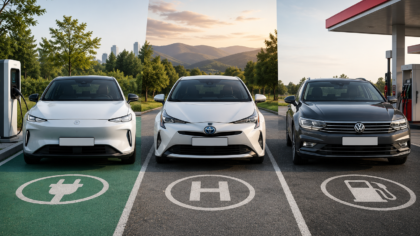
They give automakers a way to offer lower-emission options to drivers who are not ready for full electric ownership. They also give buyers a stepping stone toward electrification.
For many people, the first electrified car they buy may not be a full EV. It may be a hybrid.
The Plug-In Hybrid Question
Plug-in hybrids can be attractive because they promise electric driving for shorter trips and petrol backup for longer journeys.
In theory, this sounds ideal.
A driver could use electric power for daily commuting, then rely on the engine for road trips. That would reduce fuel use without range anxiety.
But plug-in hybrids only make sense if the driver actually charges them.
If a plug-in hybrid is rarely plugged in, it may behave more like a heavier petrol car with extra hardware. That can reduce the real-world benefit.
This is why plug-in hybrids require more honesty from buyers. If you have home charging or easy workplace charging, a PHEV may fit your routine. If you do not plan to charge regularly, a regular hybrid may be simpler.
The best choice depends on your habits, not just the brochure.
What Drivers Should Consider Before Choosing
Drivers comparing hybrid and electric cars should start with daily routine.
How far do you usually drive? Can you charge at home? Do you often take long trips? Do you mostly drive in the city or on motorways? How long do you plan to keep the car? Are you trying to reduce fuel costs, lower emissions or simply avoid charging worries?
These questions matter more than trends.
A full EV may be the best choice for someone with home charging and predictable driving. A regular hybrid may be better for someone who wants efficiency without charging. A plug-in hybrid may suit someone who can charge regularly but still wants petrol backup.
There is no single answer for every driver.
That is why the hybrid comeback makes sense. It reflects a market where buyers want cleaner options, but not all of them are ready for the same solution.
Why Automakers Still Care About Hybrids
Automakers are also paying close attention to hybrids because they help meet different customer needs.
Building only EVs may not work in every market at the same speed. Some buyers still want petrol engines. Some governments are pushing cleaner vehicles. Some charging networks are still developing. Hybrids allow carmakers to offer a middle option while EV adoption continues to grow.
This is especially useful in markets where charging infrastructure is uneven or where buyers are more price-sensitive.
Hybrids also give brands more flexibility. A company can sell fully electric models to ready buyers, hybrids to cautious buyers and plug-in hybrids to people who want both electric driving and long-range backup.
In the short term, that mixed approach may be more realistic than expecting every driver to switch at once.
Final Takeaway
Hybrid cars are getting popular again because they solve a practical problem.
Many drivers want better fuel economy and cleaner technology, but they are not fully ready to depend on charging. Hybrids offer a familiar middle ground: lower fuel use in many situations, no need to plug in for regular hybrids and less anxiety about long trips.
That does not mean hybrids are better than EVs for everyone.
A full electric car can be the smarter choice for drivers with home charging and predictable routes. A plug-in hybrid can work well for people who charge regularly. A regular hybrid can be the simplest option for drivers who want efficiency without changing their routine.
The real lesson is that the shift away from traditional petrol cars is not happening in one straight line.
For many people, the future may arrive in stages. And right now, hybrids are proving that the middle stage still matters.

Comments
You can write your views about this story. Comments may be moderated according to site settings.