
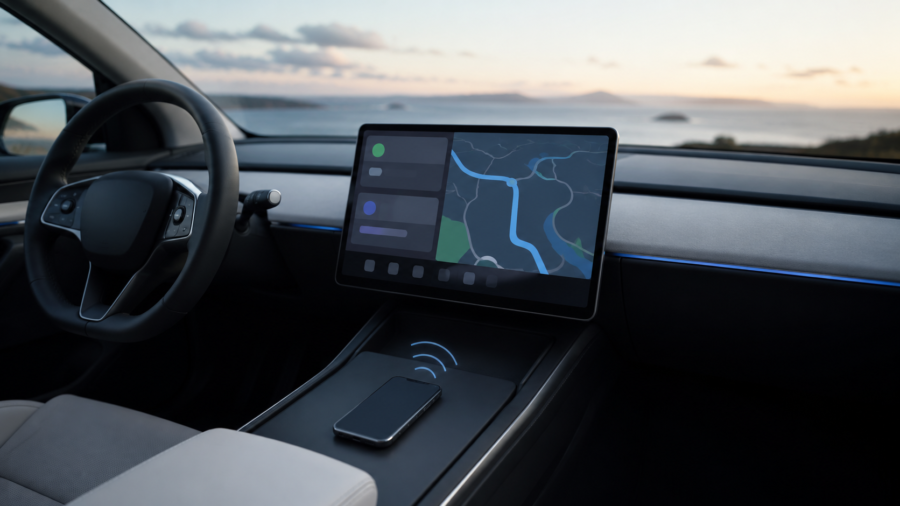
Electric cars are changing what drivers expect from vehicles. Range, charging speed and battery warranty still matter, but software is becoming just as important.
That is why Apple CarPlay and Android Auto remain such a big deal.
General Motors made waves when it decided to remove Apple CarPlay and Android Auto support from many of its new electric vehicles, choosing instead to push its own built-in software system. The decision was controversial because many drivers already rely on phone mirroring for navigation, music, messages, podcasts and daily driving routines.
Now a third-party workaround called EVPlay is getting attention because it claims to bring Apple CarPlay and Android Auto back to several GM-built EVs. Car and Driver reported that EVPlay LT is a $199 device with no subscription that can enable wired and wireless CarPlay and Android Auto in models such as the Chevy Equinox EV, Blazer EV, Silverado EV, GMC Sierra EV, Hummer EV and some Cadillac EVs. The report also noted that a more expensive EVPlay Max version adds broader Android-based features, streaming and app support.
The bigger story is not only one accessory. It is what this says about modern cars: drivers do not want software decisions forced on them if the replacement does not feel better.
Why GM removed CarPlay from many EVs
GM’s decision was based on control.
Automakers want more control over the digital experience inside the car. If the dashboard is controlled by the manufacturer, the company can manage navigation, subscriptions, charging data, driver assistance features, service alerts, app partnerships and future paid features.
That is especially important in electric cars.
An EV’s software is closely connected to range estimates, charging station routing, battery preconditioning and energy use. Automakers argue that built-in systems can understand the vehicle better than a phone-mirroring layer.
That argument makes sense in theory.
If a car knows the battery level, charger compatibility, weather, elevation and route, it can plan charging stops more intelligently. A built-in system can also be updated over time and integrated with the car’s hardware.
But drivers do not judge software only by strategy. They judge it by daily use.
Why drivers still prefer familiar phone systems
Apple CarPlay and Android Auto are popular because they are familiar.
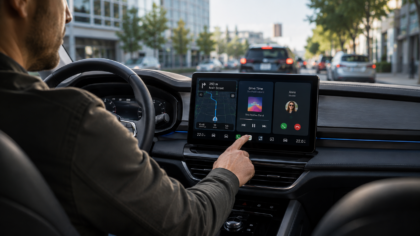
Drivers already use Apple Maps, Google Maps, Waze, Spotify, Apple Music, podcasts, voice assistants, contacts and messaging apps on their phones. When those apps appear on the car screen, the driver does not need to learn a new system.
That convenience is hard to replace.
A built-in car system may have better access to vehicle data, but if the interface feels slower, the apps are limited or navigation is less familiar, many drivers will still prefer phone mirroring.
This is especially true because people change cars less often than they change phones. A car infotainment system can feel outdated after a few years, while a phone keeps getting app updates.
For many users, CarPlay and Android Auto are not luxury features. They are part of the basic driving experience.
Why this matters more in EVs
In an EV, software affects more than entertainment.
Drivers use the screen to find chargers, plan routes, monitor battery range and understand energy use. If the software is frustrating, the whole EV experience can feel worse.
That creates a challenge for automakers.
They want drivers to use built-in navigation because it can support EV-specific features such as battery preconditioning before fast charging. But drivers may still prefer Google Maps or Apple Maps because they trust the interface, traffic data or saved locations.
The best solution may not be forcing one system over the other.
Instead, automakers could make their own software excellent while still allowing phone mirroring for users who want it. That gives drivers choice.
What the EVPlay workaround shows
The EVPlay device is interesting because it exists at all.
If many drivers were happy without CarPlay or Android Auto, a workaround would not attract much attention. The fact that a third-party company is building hardware to restore those features shows there is real demand.
According to Car and Driver, EVPlay says the LT version can be installed through USB with a simple app setup and can enable both wired and wireless phone-mirroring features in supported GM EVs. The company also acknowledges that GM could potentially block the system in the future, though EVPlay argues that doing so could upset customers.
That uncertainty matters.
A workaround can be useful, but it is not the same as official support. Buyers should understand that third-party systems may depend on software behavior that automakers can change later.
The bigger battle: car companies vs tech habits
This debate is part of a larger battle between automakers and tech ecosystems.
Car companies want the dashboard to become a platform. Tech companies want the phone to remain the center of digital life. Drivers often just want the simplest system that works.
That creates tension.
Automakers see software as a future revenue source. They may want subscriptions for navigation features, connected services, entertainment, driver assistance or app ecosystems. If Apple or Google controls the dashboard experience, automakers may feel they are losing part of that relationship with the customer.
But customers may see it differently.
Many drivers already paid for the car. They may not want another software ecosystem if their phone already does the job better. They may also worry that car companies will use software control to push subscriptions or limit choice.
This is why CarPlay and Android Auto have become symbols of user control inside the car.
Why built-in systems still matter
None of this means built-in car software is useless.
In fact, built-in EV software can be very important. It can show battery status more accurately, manage charging stops, control climate settings, update vehicle functions and connect deeply with safety systems.
A good built-in system can improve the driving experience.
The problem is when automakers treat built-in software as a replacement before it is clearly better for users.
Drivers do not want to be told a missing feature is progress. They want the new system to prove it is better.
That is the key lesson for every automaker.
What car buyers should check before buying an EV
Car buyers should now treat infotainment software as a major part of the purchase decision.
Before choosing an EV, buyers should check whether the car supports Apple CarPlay, Android Auto or both. They should also test the built-in navigation system, charging route planner, voice controls and app support.
It is also worth asking whether phone mirroring is wired, wireless or unavailable.
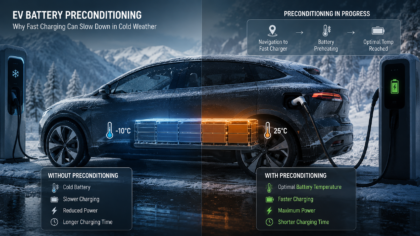
For EVs, buyers should check whether the built-in navigation can precondition the battery before fast charging. That feature can matter on road trips because a warm battery may charge faster in some conditions.
The best EV software setup depends on the driver. Some people may be happy with the built-in system. Others may consider CarPlay or Android Auto essential.
The important thing is to know before buying.
Why this could affect resale value
Software features can also affect resale value.
A used EV without CarPlay or Android Auto may be less attractive to some buyers, especially if competing models include those features. The same applies to slow infotainment systems, weak app support or missing over-the-air updates.
Cars used to be judged mainly by mileage, condition, engine, service history and brand. Now software experience is part of the value.
This is a major change for the auto industry.
A car with strong hardware but frustrating software may feel outdated faster than expected. A car with flexible software, good updates and familiar phone integration may age better.
What automakers should learn
The lesson for automakers is simple: choice matters.
Drivers can accept built-in software if it is genuinely useful. But removing popular features creates risk if the replacement does not feel clearly better.
Automakers should not assume that controlling the dashboard automatically creates loyalty. Loyalty comes from trust and convenience.
If a driver prefers CarPlay or Android Auto, allowing that choice may make the car more attractive. If the built-in system is truly better, users will adopt it naturally.
The strongest strategy may be to offer both.
The bigger takeaway
The EVPlay workaround for GM EVs shows that Apple CarPlay and Android Auto still matter deeply to drivers.
Electric cars are becoming more software-defined, but that does not mean drivers want automakers to remove familiar tools. In many cases, the phone remains the most trusted digital device in the car.
GM and other automakers may want more control over the EV dashboard, especially as cars become connected platforms. But users still care about simplicity, app familiarity and choice.
The future of car software will not be decided only by automakers or tech companies. It will be decided by what drivers actually use every day.
If built-in systems become better, people will use them. If they do not, drivers will keep looking for ways to bring their phones back onto the dashboard.

Comments
You can write your views about this story. Comments may be moderated according to site settings.