
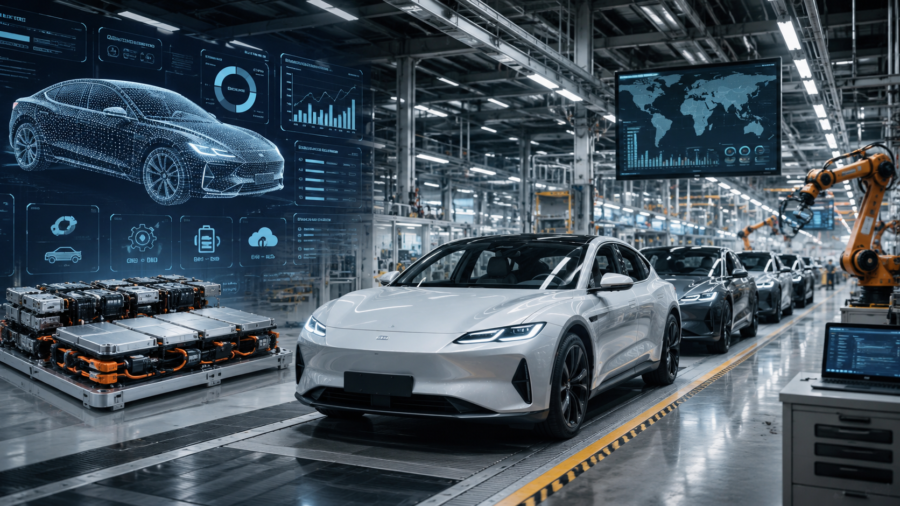
Germany has spent decades as one of the most powerful names in the global car industry.
Mercedes-Benz, BMW, Volkswagen, Audi and Porsche helped define what many buyers expected from premium cars: strong engineering, high-speed performance, luxury interiors and long-term brand trust.
But the auto industry is changing fast, and German carmakers are feeling the pressure.
Reuters reported that an EY study found German carmakers fell behind global competitors in early 2026. According to the report, German automakers faced a 4% revenue decline while major global carmakers overall saw revenue rise by 2%. The pressure came from weaker sales in important markets, high software development costs, electric vehicle transition challenges and competition from faster-moving rivals.
This does not mean German car brands are disappearing. They remain powerful, profitable and globally recognized. But it does show that the old strengths of the car industry are no longer enough by themselves.
In the new auto market, software, batteries, EV pricing and speed of innovation matter as much as engines, interiors and brand heritage.
Why German carmakers are under pressure
The pressure comes from several directions at once.
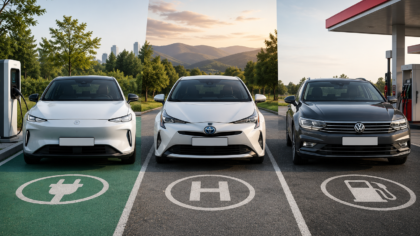
First, the electric vehicle transition is expensive. Automakers need new platforms, battery supply chains, electric motors, charging technology and dedicated factories. They also need to keep selling petrol, diesel and hybrid vehicles during the transition.
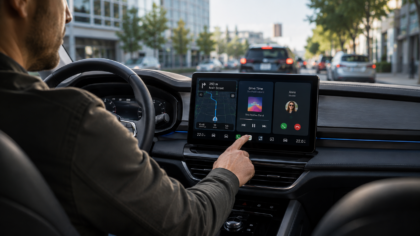
Second, software has become one of the most important parts of a modern car. Drivers now expect connected services, over-the-air updates, driver assistance features, app integration and smart infotainment systems.
That is a major shift for traditional car companies. In the past, the mechanical product was the center of the car. Now the digital experience can shape whether buyers love or dislike a vehicle.
Third, competition from Chinese EV makers is growing. Brands such as BYD, Chery, MG, Geely and others are expanding into Europe and the UK with competitively priced electric vehicles. The Guardian recently reported that Chinese automakers showed strong gains in the UK as electric vehicle sales increased.
That creates a difficult problem for German brands: they must defend premium image while also responding to lower-cost EV competition.
Why software is such a big challenge
Cars are becoming computers on wheels, but that is easier to say than to build.
A modern vehicle may include advanced driver assistance, battery management, navigation, app stores, voice assistants, connected services, remote updates and cloud-based features. All of this requires software teams, cybersecurity planning and long-term support.
Traditional automakers are used to designing vehicles over long development cycles. Software moves faster. Bugs need to be fixed quickly. Features need updates. Users expect phone-like reliability and app-like convenience.
This is where some legacy automakers have struggled.
Building a great engine and building a great software platform are different skills. German automakers have deep engineering talent, but the industry now demands a different kind of engineering speed.
That does not mean they cannot adapt. It means adaptation is expensive and difficult.
Why China matters so much
China is not only the world’s biggest car market. It is also one of the most competitive EV markets.
Chinese automakers have moved quickly because they operate in a market where EV competition is intense, battery supply chains are strong and buyers are used to digital features. That gives many Chinese brands a speed advantage.
For German carmakers, China used to be a major growth engine. Premium German vehicles had strong appeal among Chinese buyers. But local Chinese brands have become much stronger, especially in electric vehicles.
This creates pressure from both sides.
German brands face tougher competition inside China. At the same time, Chinese brands are expanding into Europe and other international markets.
The result is a more crowded global market where brand history alone is not enough.
Why premium brands cannot ignore price
German carmakers often compete in the premium segment. That gives them strong margins, but it also creates a challenge in the EV era.
Electric vehicles are still expensive to build, especially when battery costs, software, safety systems and advanced interiors are included. Premium EVs can become very expensive very quickly.
But buyers are becoming more price-conscious. Many people like the idea of an electric car, but they do not want to pay a luxury price just to get one.
If Chinese EV brands offer strong range, modern interiors, long warranties and lower prices, some buyers may reconsider what a premium car needs to be.
German brands can still win on design, performance, handling, quality and trust. But they may need to show clearer value.
Why hybrids are still part of the answer
The pressure on German carmakers does not mean the future is only battery electric vehicles.
Many buyers are still choosing hybrids and plug-in hybrids because they offer a bridge between petrol cars and full EVs. Hybrids can reduce fuel use without requiring every driver to rely fully on charging infrastructure.
This matters because EV adoption is uneven. Some countries have strong charging networks and incentives. Others are slower. Some buyers can charge at home. Others cannot.
Automakers now need flexible strategies. They cannot assume every market will move to full EVs at the same pace.
That is why companies are balancing electric vehicles, hybrids and more efficient combustion models while they watch buyer demand carefully.
What this means for car buyers
For buyers, this changing market can be good news.
More competition usually means more choice. German brands, Chinese EV makers, Japanese hybrids, Korean EVs and American automakers are all trying to attract buyers with better technology, pricing and features.
But buyers need to compare more carefully than before.
In the past, choosing a car was often about brand, engine, fuel economy and comfort. Now buyers also need to think about software updates, charging speed, battery warranty, app support, driver assistance systems and resale value.
A car that looks impressive in a showroom may not feel as good if the software is slow, charging is inconvenient or updates are unreliable.
The best car is no longer only the one with the best badge. It is the one that fits the buyer’s daily life.
Why this does not mean German carmakers are finished
It would be wrong to say German carmakers are finished.
They still have enormous strengths: engineering experience, global dealer networks, strong premium brands, motorsport heritage, safety expertise and loyal customers.
They also have the money and talent to adapt.
The question is not whether German carmakers can survive. The question is whether they can move fast enough to compete in a market where software, EV cost and battery supply matter more than ever.
If they solve software problems, build competitive EVs and keep their premium identity, they can remain major players. If they move too slowly, they may lose ground to faster rivals.
The bigger takeaway
German carmakers are under pressure because the auto industry is being rebuilt around EVs, software and global competition.
The old formula of strong engines, luxury interiors and brand prestige still matters, but it is no longer enough. Buyers now expect smart software, efficient electric platforms, competitive prices and long-term digital support.
Chinese EV makers are rising. Hybrid demand remains important. Software costs are increasing. Markets are changing at different speeds.
For German brands, the next few years will be a major test.
They do not need to abandon what made them successful. But they do need to prove that German engineering can also lead in batteries, software and the new digital car experience.
The car industry is not only changing what powers vehicles. It is changing what buyers value in a car.

Comments
You can write your views about this story. Comments may be moderated according to site settings.