
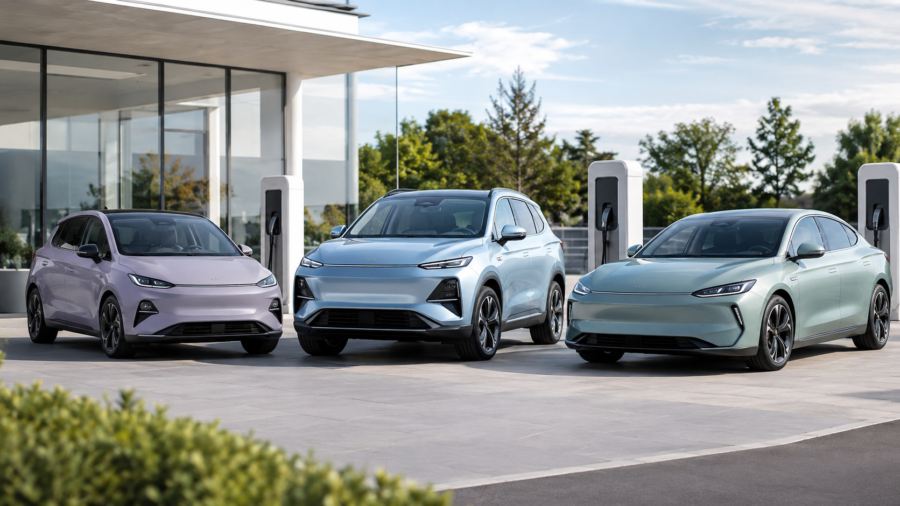
The electric car market is getting more competitive, and the UK is becoming one of the clearest places to see that change.
For years, electric vehicles were often associated with a small group of familiar brands. Tesla became the name most people recognized. Traditional automakers like Volkswagen, BMW, Hyundai, Kia and Nissan pushed their own EVs. Premium brands focused on expensive electric SUVs and sedans.
Now Chinese EV brands are becoming harder to ignore.
According to The Guardian, UK car sales in May 2026 reached their highest May level since before the Covid-19 pandemic, with 160,662 registrations. Electric vehicles accounted for more than 27% of the market, and Chinese automakers such as Chery and BYD showed strong gains.
Reuters also reported recently that global EV demand rose for a second straight month in April, with new battery-electric and plug-in hybrid registrations reaching 1.6 million. That does not mean every EV market is growing at the same speed, but it shows that the electric car story is far from over.
For car buyers, the rise of Chinese EV brands could mean more choice, more price competition and faster technology changes. But it also brings new questions about service networks, resale value, software support and long-term reliability.
Why Chinese EV brands are growing
Chinese automakers have several advantages in the EV market.
China is the world’s largest electric car market, which means many Chinese brands have been building and testing EVs at huge scale. They have experience with batteries, software, manufacturing and price competition.
That matters because electric cars are different from traditional petrol or diesel cars. Battery cost, software quality, charging efficiency and production scale can make a big difference.
Brands such as BYD, Chery, MG, Geely and others have been expanding outside China. Some focus on affordable EVs. Others are moving into premium or family-focused segments. Many are trying to offer more equipment for the money than established rivals.
For buyers, that can make the EV market feel less limited. Instead of choosing between a few expensive models, consumers may see more options at different price points.
Why the UK is an important market
The UK is a useful test market because EV adoption is already meaningful, but buyers are still sensitive to price, charging access and running costs.
The Guardian reported that battery electric vehicles took more than 27% of the UK market in May 2026. That is a strong share, especially in a market where many households still worry about charging availability and vehicle price.
Chinese EV brands may benefit from this moment because many buyers want electric cars but do not want to pay premium prices.
If a new brand offers good range, modern features and a lower price, some buyers will consider it even if the badge is less familiar.
That is a major shift. In the past, car buyers often relied heavily on brand loyalty. In the EV era, value, battery warranty, charging speed, software and equipment can influence decisions just as much as the badge on the front.
What this means for traditional automakers
Traditional automakers are under pressure.
European, Japanese and American brands have spent decades building trust, dealer networks and brand identity. But electric cars change the competition. A newer brand can enter the market with a strong battery platform, modern interior and aggressive pricing.
This does not mean traditional brands are in trouble everywhere. Many still have loyal customers, strong safety reputations, better-known service networks and deeper experience with local markets.
But they may need to respond more quickly on price and features.
If Chinese EVs offer long warranties, strong standard equipment and competitive pricing, older brands may have to reduce prices, improve finance deals or add more features to stay attractive.
That could be good for buyers.
Price competition could help EV adoption
One of the biggest barriers to EV adoption has been price.
Electric cars can be cheaper to run than petrol cars in some situations, especially when drivers can charge at home. But the upfront purchase price still matters. Many buyers compare monthly payments before they compare lifetime running costs.
Chinese EV brands could push the market toward lower prices or better value.
This does not mean every Chinese EV will be cheap. Some are premium. But the arrival of more brands increases competition, and competition usually helps consumers.
Lower prices could also make EVs more attractive for families, commuters and first-time electric car buyers.
That is important because the EV transition will not depend only on early adopters. It needs ordinary buyers to feel that electric cars are practical, affordable and easy to live with.
What buyers should check before choosing a newer EV brand
More choice is good, but buyers should still be careful.
The first thing to check is service support. A car may look attractive on paper, but buyers need to know where it can be serviced, how quickly parts are available and whether local dealers are established.
The second question is warranty. Battery warranties are especially important. Buyers should check coverage length, mileage limits and what percentage of battery health is guaranteed.
The third question is charging. Range figures are useful, but real-world charging speed and charging network compatibility matter just as much. A car with good range but slow charging may not suit frequent long-distance drivers.
The fourth question is software. EVs rely heavily on software for battery management, navigation, charging information and driver assistance features. Buyers should check whether updates are available and how the brand handles software support.
The fifth question is resale value. Newer brands may offer strong value upfront, but resale prices can be harder to predict.
A good EV purchase is not only about the sticker price. It is about the whole ownership experience.
Why this does not mean EV growth is simple
The EV market is still uneven.
Reuters reported that global EV demand rose for a second straight month in April, but registrations were still lower than March’s record level. This shows the market can grow while still moving unevenly from month to month.
Some regions are accelerating. Others are slowing or changing incentives. Some buyers are choosing hybrids instead of full EVs. Some automakers are delaying expensive EV projects while focusing on models with clearer demand.
This is why the rise of Chinese EV brands should not be read as one simple story.
The market is not “EVs are failing” or “EVs are taking over instantly.” The truth is more mixed: electric cars are growing, but buyers are becoming more price-conscious and automakers are becoming more selective.
Why hybrids are still part of the story
Chinese EV growth does not mean hybrids are disappearing.
In fact, many automakers are leaning more heavily on hybrid models because they offer a bridge for buyers who are not ready for a full EV. Hybrids do not require home charging, and they can reduce fuel use without changing driving habits as much.
Toyota’s cautious EV strategy and continued hybrid focus show how important this middle ground remains.
For some buyers, a full EV makes perfect sense. For others, a hybrid or plug-in hybrid may be easier today.
The most likely future is not one single powertrain. It is a mix: EVs, hybrids, plug-in hybrids and efficient combustion vehicles depending on market, price and use case.
What this means for the next few years
The next stage of the EV market will likely be more competitive and more practical.
Buyers will expect better prices, longer warranties, faster charging and more reliable software. Automakers will need to prove that their EVs are not only futuristic, but easy to own.
Chinese brands will keep pushing into Europe and the UK. Traditional automakers will respond with cheaper EVs, better financing, more hybrids and stronger software features.
That competition could make electric cars more accessible.
But buyers should not focus only on brand headlines. The smartest choice will depend on charging access, driving habits, budget, warranty and long-term ownership costs.
The bigger takeaway
Chinese EV brands gaining ground in the UK shows how quickly the electric car market is changing.
The old EV market was dominated by a few familiar names and higher prices. The new market is becoming more crowded, more competitive and more value-focused.
For buyers, that can be good news. More competition can mean more choice and better deals.
But it also means shoppers need to compare carefully. A lower price is only one part of the decision. Service support, battery warranty, charging performance, software and resale value all matter.
The EV transition is not slowing into irrelevance. It is becoming more mature. And in a mature market, the winners will be the cars that make electric driving feel simple, affordable and trustworthy.

Comments
You can write your views about this story. Comments may be moderated according to site settings.